CUBAN

Pan Con Tomate

Pan Con Tomate Is An Easy Spanish Tapas

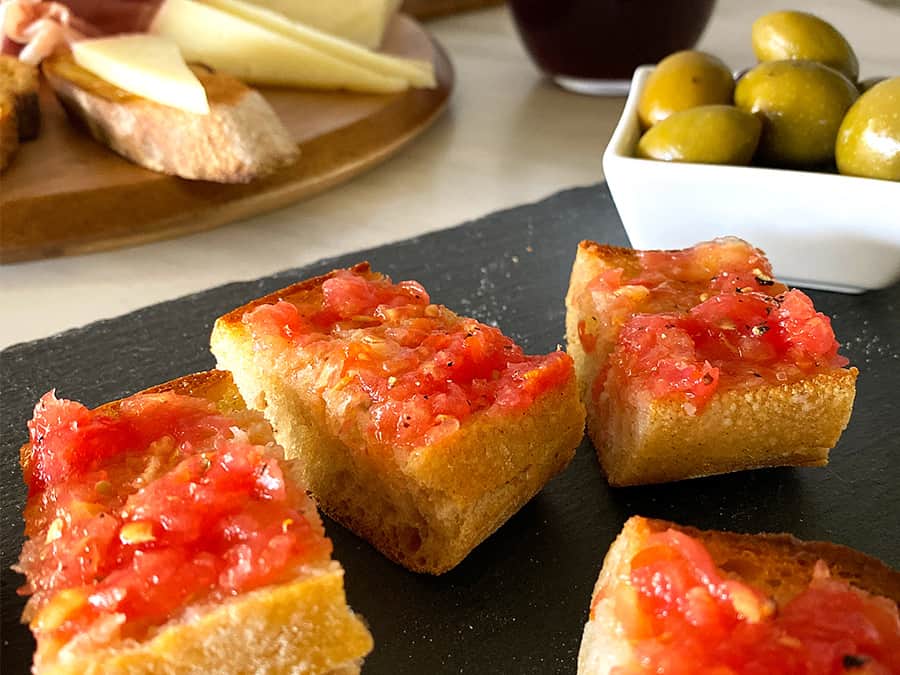
Pan Con Tomate is a very traditional Spanish tapas that is deceptively simple and so, so amazing! I must confess that I just recently tried this, although it’s something my mom loves and has told me about literally for decades. It just seemed too simple to be a “thing.” But I stand so, so corrected!

Pan Con Tomate is basically bread with tomato… see what I mean? It sounds so basic, so meh. But don’t dismiss it until you’ve tried it!! It’s similar in taste to Italian bruschetta but simpler, more subtle, and a great complement to a Tabla Mixta (cheese and charcuterie board). You can eat it on its own or pile on some cheese and Spanish ham. 

I tried Pan Con Tomate for the first time at Bulla Gastrobar, one of my favorite tapas bars in Miami. We ordered a Tabla Mixta and an order of Pan Con Tomate to go with it.  And sangria, of course! I devoured it. I just couldn’t wait to make it at home and show it to you!!
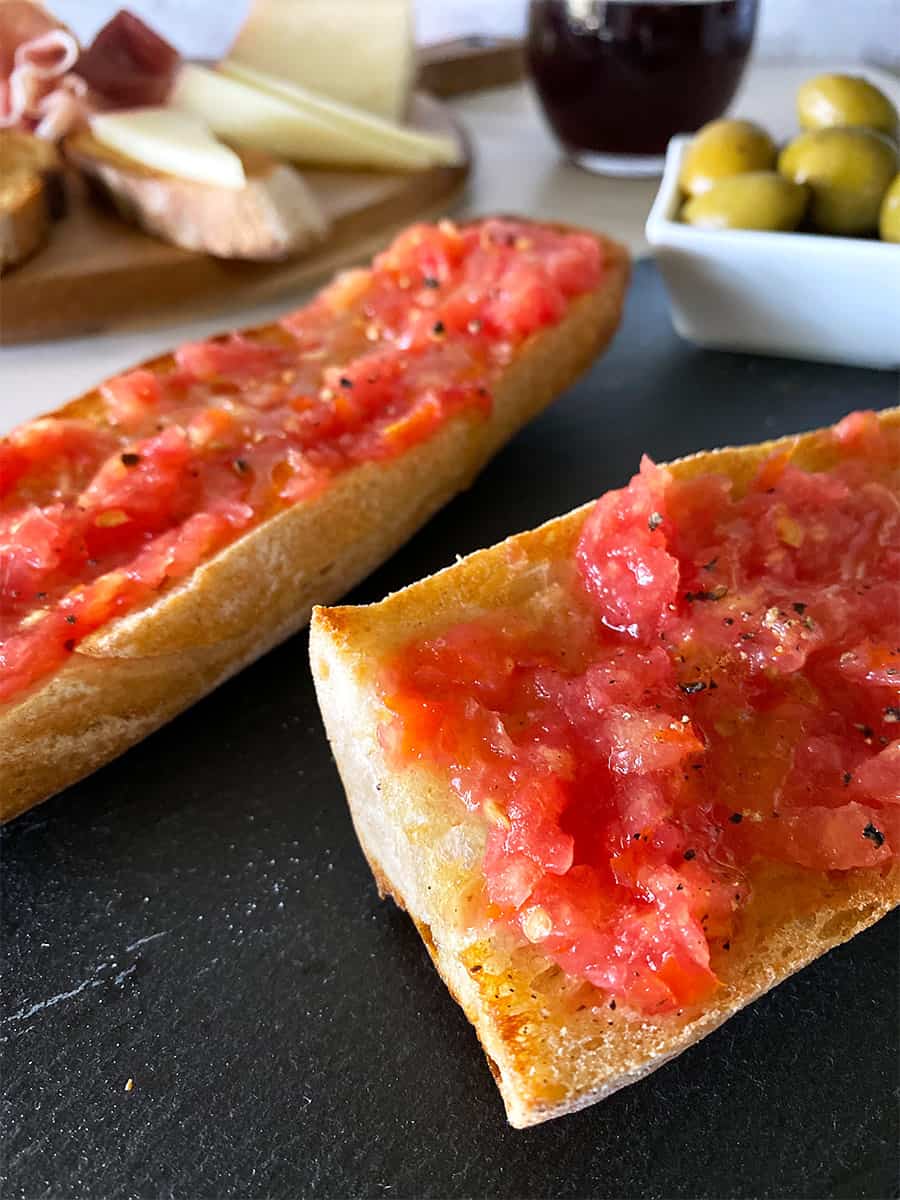
Pan Con Tomate

Super Easy Recipe

This requires no cooking and can really be done with just four basic ingredients in ten minutes tops. The tomato topping is literally grated tomato with a bit of salt and pepper. That’s it! Here are the steps:

  • Cut the baguette loaf into 3-4 pieces crosswise and then split each piece in half, like you would for a sandwich. Or you can cut it into thin diagonal slices, similar to crostini.
  • Brush a little olive oil on the bread and toast it.
  • Cut a tomato in half and gently squeeze to remove most of the seeds. Then grate each half into a bowl using a box grater. Add a little salt and pepper.
  • Cut a garlic clove in half and rub it on the toasted bread.
  • Spread a layer of the grated tomato on top of the garlic-rubbed toast. 
  • Drizzle with a bit of olive oil.
  • Pile on extra toppings if you’re so inclined.
  • Daintily devour it with wine or sangria. 

Easy to make and easy to make it disappear!

Pan Con Tomate

Quality Ingredients Go Into This Pan Con Tomate Recipe

The beauty of this Spanish tapas dish is that it’s so very simple to make. But for this Pan Con Tomate tapas to shine and be all it’s meant to be, you need quality ingredients to build it. Here’s what you need:

Loaf of Bread – You need a good quality loaf of French bread or Ciabatta for this Pan Con Tomate recipe. I used a baguette loaf from a great local baker – shout out to Zak the Baker bread, available at my local Whole Foods.

Tomato – You want a nice, firm, vine-ripened tomato for this. I tried an heirloom tomato, thinking that would be best, but I found it not as good as the vine-ripened tomatoes. 

Garlic – make sure to use fresh, fresh garlic! I tried this recipe with some poor little leftover garlic cloves the first time I made the Pan Con Tomate, and the garlic flavor was not strong enough.

Olive Oil – You need a drizzle of good quality olive oil. It brightens things up and adds just the right notes. Has to be olive oil.

Prosciutto – This is optional, but I highly recommend it! The traditional ham to use for this is Spanish Iberico Ham or Serrano Ham. But me and my peeps really love prosciutto, so I used that instead.  

Manchego Cheese – Again, totally optional, but a great addition. 
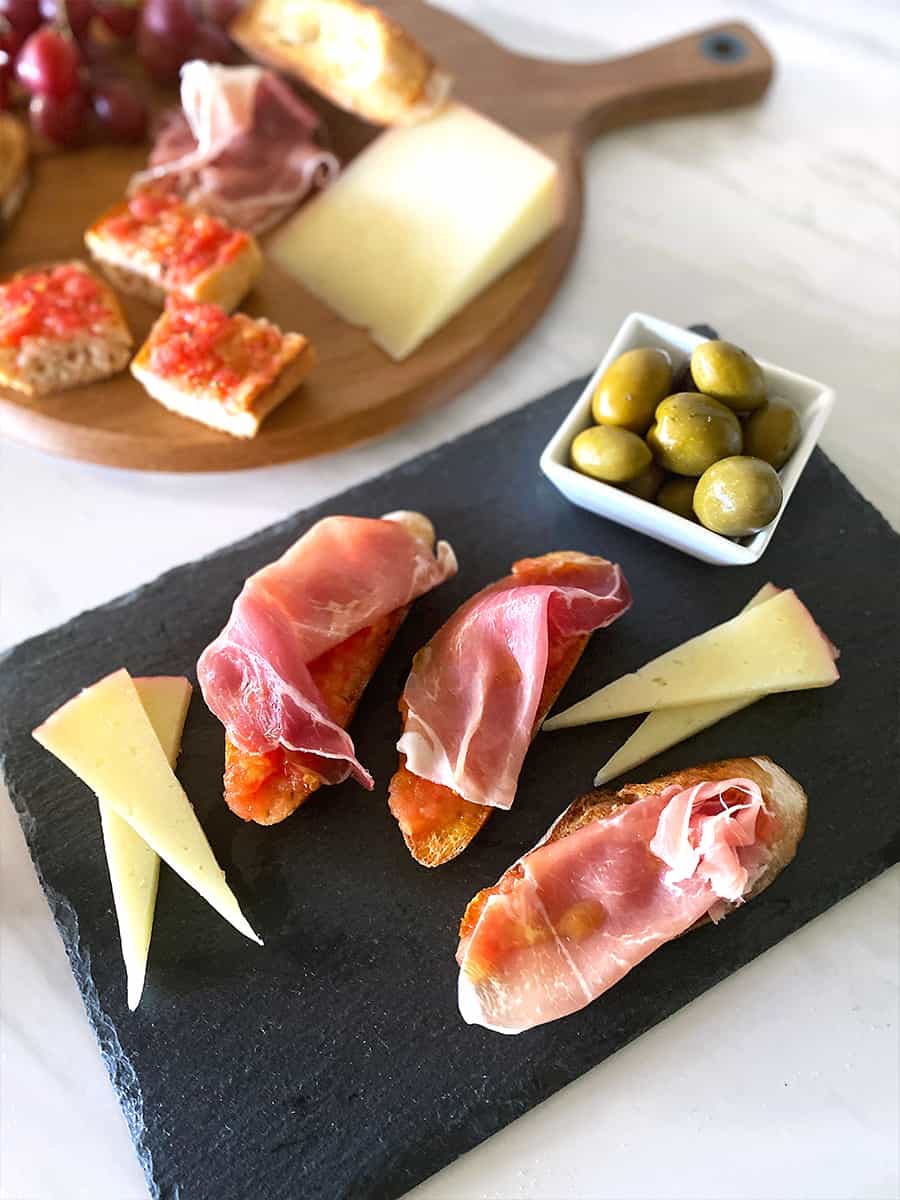
spanish tapas

This is the perfect, easy start to a lovely meal or tapas party. Or a great way to get date night off to the right track ?

Try it with a pitcher of red wine sangria… now you’re talkin’!

bean train food for thought

I must admit I can be such a brat! For years my mom would gush about how good Pan Con Tomate (bread with tomato) was. And how she grew up eating Pan Con Aguacate (bread with avocado – aka avocado toast), and I would roll my eyes and refuse to try them. 

When I was growing up and hearing about these dishes, it sounded so ethnic. It was stuff old Cubans ate, but not for young Americans. I just wanted to be American and eat hamburgers and apple pie. I suppose every immigrant child goes through a phase like this as they try to assimilate and fit in with other kids. 

Now the joke’s on me, because everybody loves avo toast and my trendy tapas bar serves Pan Con Tomate. I really should have listened to my mother. ?
Print
clock clock iconcutlery cutlery iconflag flag iconfolder folder iconinstagram instagram iconpinterest pinterest iconfacebook facebook iconprint print iconsquares squares iconheart heart iconheart solid heart solid icon
Pan Con Tomate Recipe

Pan Con Tomate Is An Easy Spanish Tapas

5 Stars 4 Stars 3 Stars 2 Stars 1 Star No reviews
  • Author: Sandi Abbott
  • Prep Time: 5
  • Cook Time: 5
  • Total Time: 10 minutes
  • Yield: 8 1x
  • Category: Appetizers
  • Method: toast
  • Cuisine: Spanish

Description

This simple and delicious Pan Con Tomate is a traditional tapas recipe that’s super quick and easy to make. It requires no cooking and can be done with just four basic ingredients in ten minutes tops. Try it with a little prosciutto, wine and cheese. You’ll love, love it!


Ingredients

Scale

Loaf of French baguette bread

1 garlic clove

¼ cup olive oil, more or less (I usually don’t measure this, just drizzle as I see fit 😉

3 vine-ripened tomatoes

Salt and pepper


Instructions

  • Cut the baguette loaf into 3-4 pieces crosswise and then split each piece in half, like you would for a sandwich. Or you can cut it into thin diagonal slices similar to crostini.
  • Brush a little olive oil on the cut sides of the bread and toast it.
  • Cut the tomatoes in half and gently squeeze to remove most of the seeds. Then grate each half into a bowl using a box grater affiliate link. Add a little salt and pepper to taste.
  • Cut the garlic clove in half and rub it on the cut sides of the toasted bread
  • Spread a layer of the grated tomato on top of the garlic-rubbed toast
  • Drizzle with a bit of olive oil
  • Cut into smaller pieces if desired
  • Optional: top with Iberico ham or prosciutto

Notes

Serve with cheese and charcuterie board. 

Calorie count does not include ham. 

Nutrition

  • Serving Size: slice

Pan Con Tomate Is An Easy Spanish Tapas Read More »

Easy shortcake recipe

Super Easy Shortcake Recipe With Strawberry, Guava and Maria Crackers

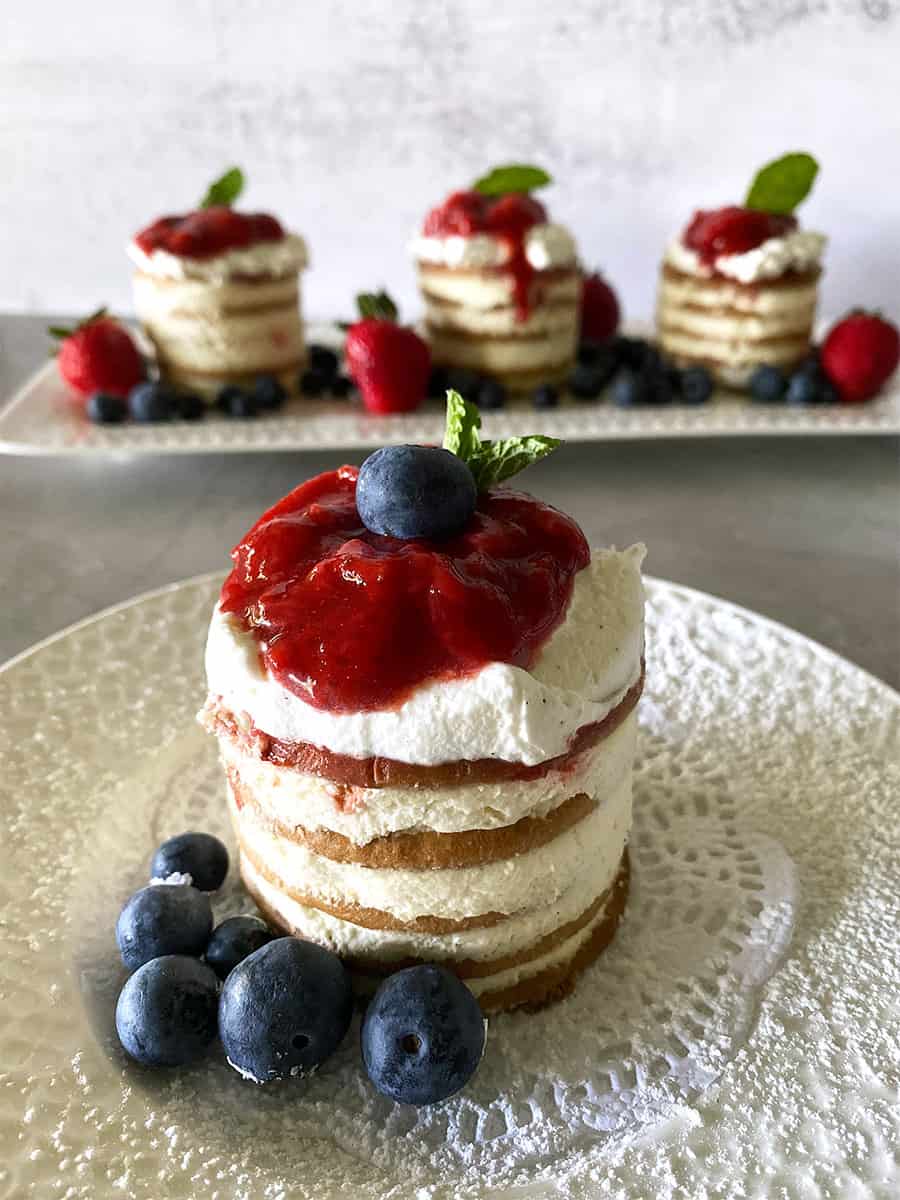
This easy shortcake recipe is my favorite! If you love strawberry shortcake, but don’t always want to make the shortbread part, this recipe was made for you. I used Maria Crackers that soften overnight, just like in an icebox cake. And the flavors! This shortcake recipe combines strawberries and guava, two flavors that work so well with whipped cream. It’s also very pretty and can be dressed up in so many ways! 

Strawberry Shortcake Icebox Cake

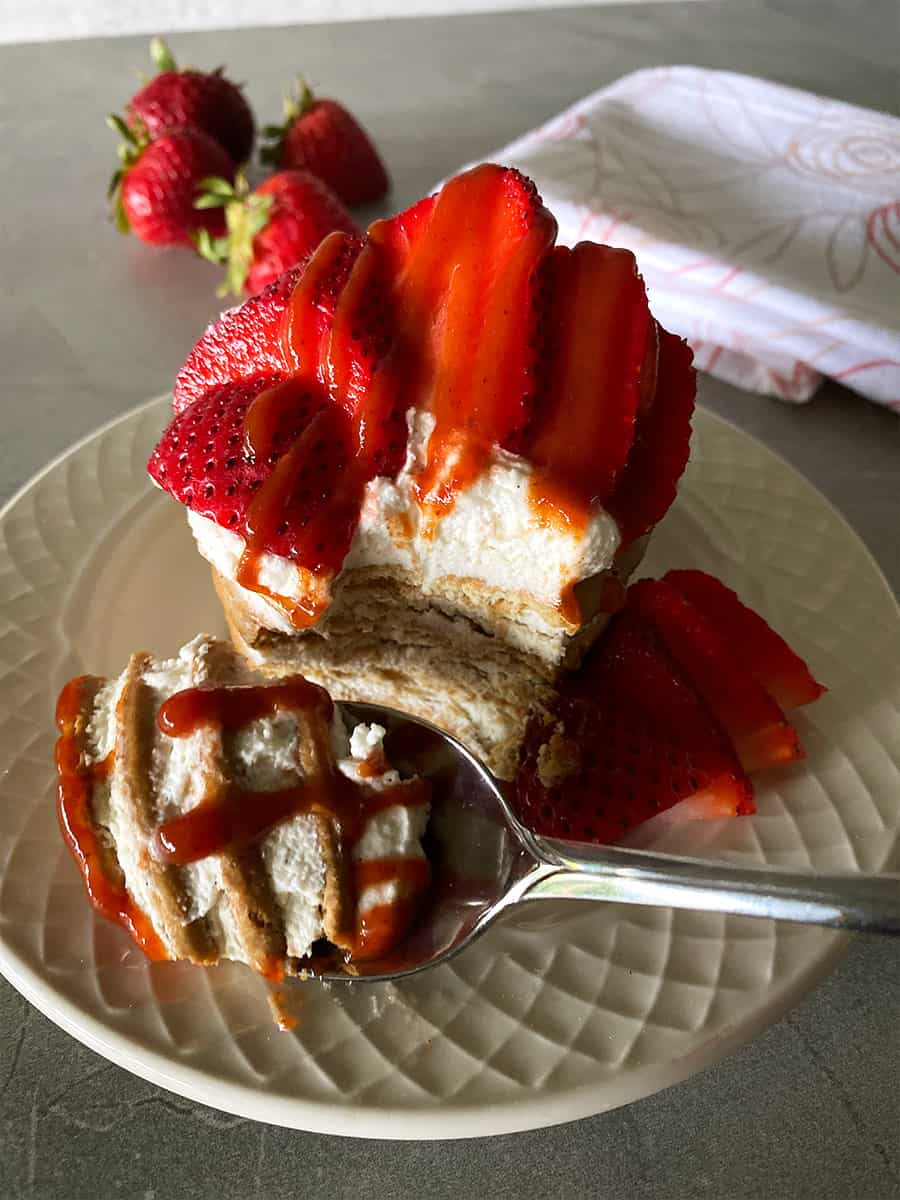
I almost called this recipe an icebox cake, because that’s pretty much what makes this Maria Crackers and whipped cream dessert work. But my main motivation was to make an easy shortcake recipe. So, I used the idea of an icebox cake and adapted it to make mini shortcakes topped with strawberries and guava marmalade. They look so pretty and remind me of a naked cake with the layers exposed. 

Easy shortcake recipe

Maria Cracker Layers

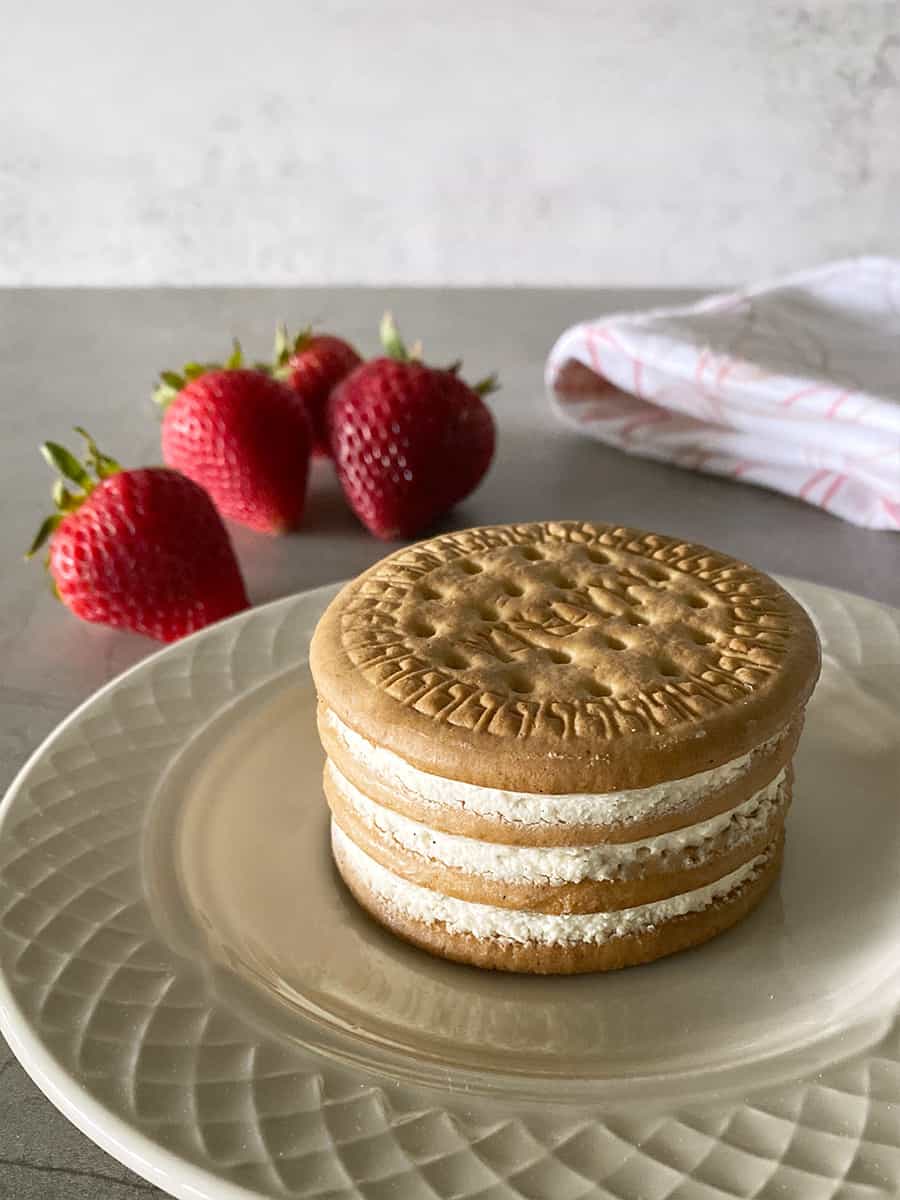
I grew up eating these sweet Maria Crackers that are a lot like a graham cracker, just thinner and little more delicate looking, which works for this recipe. Just like in an icebox cake made with chocolate wafers, the cookie softens when it’s layered with the whipped cream and becomes a thin cake. 

The flavor of the Maria Crackers is subtle and complements the guava and strawberries. In fact, Maria Crackers with cream cheese and guava is a popular Cuban snack. That’s why the flavors work so well in this recipe. I just swapped the cream cheese for whipped cream and added strawberries. 

I don’t know if you’ve noticed, but I’ve been on a Maria Crackers desserts binge. This is my third Maria Cracker recipe this week! You’ve got to check out the Dulce de Leche S’mores and Homemade Ice Cream Sandwiches

You should be able to find Maria Crackers where other crackers are sold in your local grocery store. If not, you can buy them online (affiliate link).

Guava Marmalade Enhances The Strawberries In this Cake

Strawberry shortcake is really good on its own. Whipped cream, cake and strawberries is such a classic! But the guava marmalade kicks it up a notch, as they say. Guava intensifies the strawberry flavors and adds a little sweetness. I don’t add too much sugar to the whipped cream, so the cake is not overly sweet. 

Guava marmalade is sold in cans, and you should be able to find it with the canned fruits or the international section of your local grocery store. If you can’t find it, you may be able to buy it online. You can also make it by melting guava paste with a splash of water. If you want to see how to do this, check out my Guava Bars Masa Real recipe

Easy shortcake recipe

Your Basic Strawberry Shortcake

I like to keep the base of the shortcake simple. Just Maria Crackers and whipped cream. It looks very pretty this way and that gives you the option to dress it with different fruits. Of course, strawberries are perfect on this cake. But you can also try it with mixed berries, mango, pineapple or nectarines. You can also use different compotes, like cherries.

There’s another reason why I like to keep the cake base simple. Because the cake has to sit overnight to give the Maria Crackers a chance to soften, you don’t want to add the fruits or the compotes too early. The fruit will lose its freshness and look a little wilted. So it’s best to let the cake soften before topping. 

Easy shortcake recipe

How To Keep The Layers Straight

The first time I made this dessert, I ended up with leaning shortcake towers. You need to gently press the layers together and make sure each layer is even so they will set in a straight little stack. Also, 3-4 layers is best to keep your stacks from leaning. This recipe yields either 5 shortcakes with 4 layers of whipped cream or 6 shortcakes with 3 layers of whipped cream.

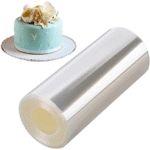
My son taught me a simple technique for making these stacks with a cellophane cake collar. You cut the sleeves to fit the circumference of the Maria Cracker and tape the ends together. Then you layer the crackers and whipped cream in the collar and gently press down on each layer to make sure the whipped cream layer is level.

If you don’t have or want to buy cellophane cake sleeves, you can still accomplish a straight stack. You just need to gently press the stack and fill in the gaps by running your finger around the cracker and evening out the whipped cream. Make sure it’s level before you add the next layer. Also, end with a cracker layer… and don’t add whipped cream to the top layer. You’ll add the whipped cream and fruit at the end, so the top layer looks fresh and beautiful. 

Easy shortcake recipe

Three Strawberry Toppings

What I love about this easy shortcake recipe is that you can top the shortcake different ways. The main cake is just whipped cream and Maria Crackers. But you can dress up the strawberries in different ways, to suit your tastes. Here’s three ways to go with strawberries.

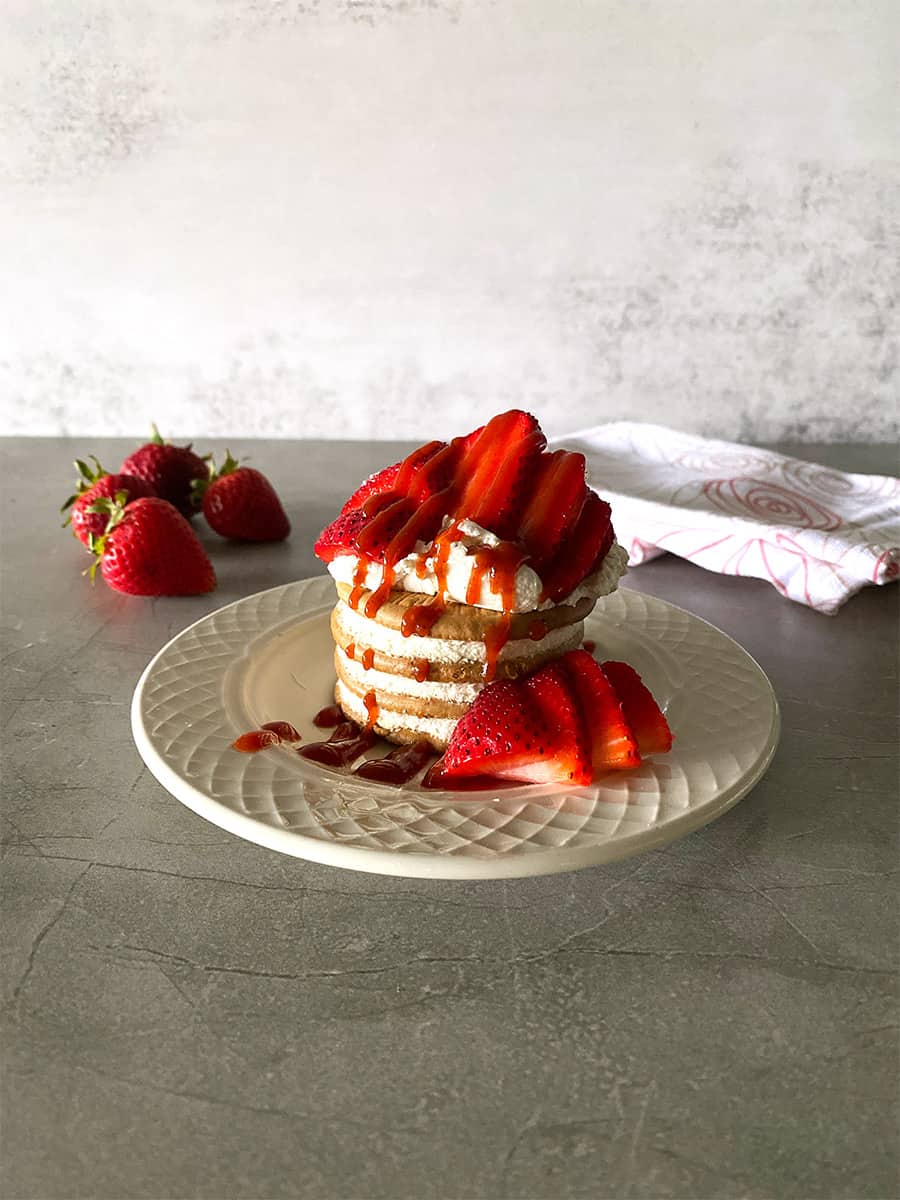
  • Fresh sliced strawberry on top of a whipped cream cloud with a drizzle of guava marmalade. This is simple to make and tastes so extra 😉
  • Add a sprinkle of sugar and a splash of Cointreau to sliced strawberries. Then, layer the berries on top of a little mound of whipped cream and drizzle the guava marmalade. I really like the flavor of the orange liqueur with the guava and strawberries!
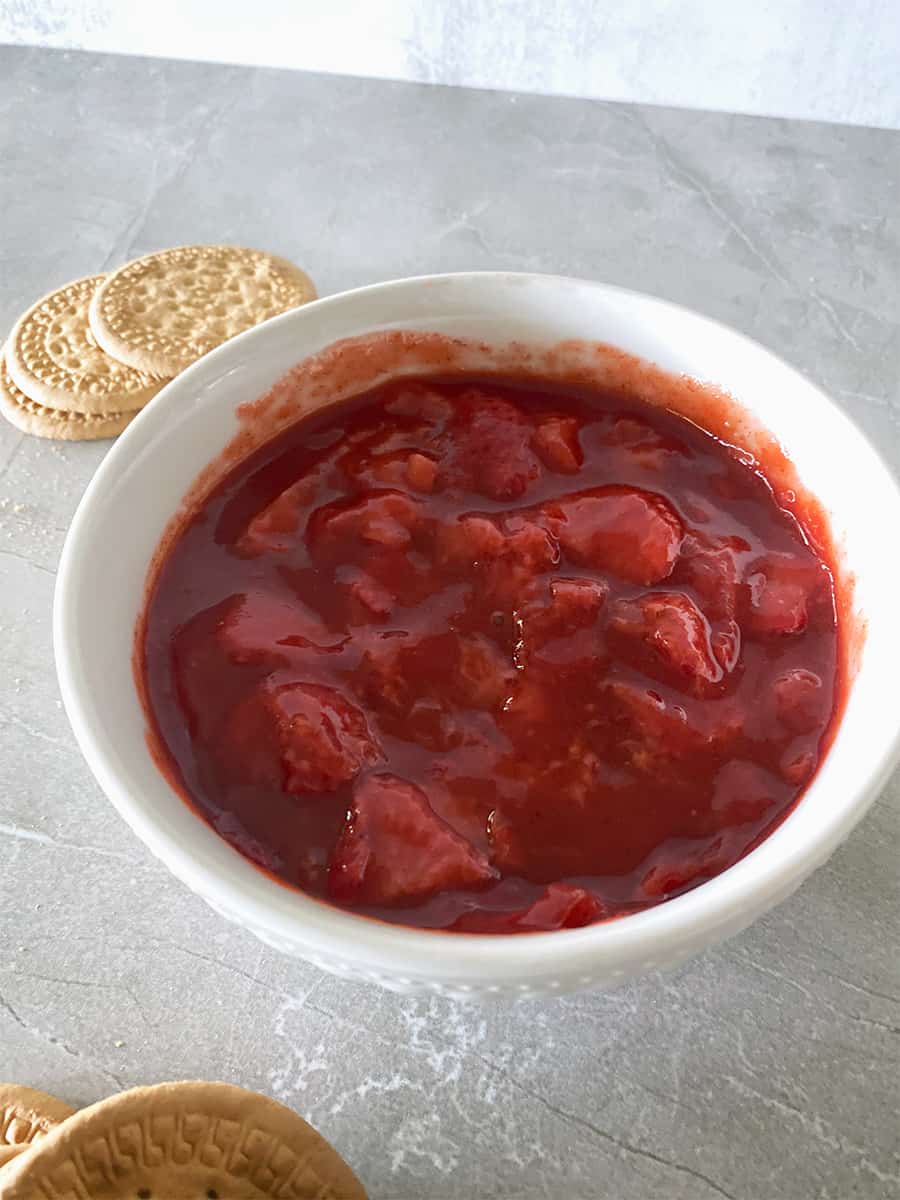
  • Make a simple compote with strawberries, guava and Cointreau. I’m partial to the compote because the flavor burst is intense but remains balanced by the whipped cream. 

However you decide to top these cute little shortcakes, you’ll end up with a very elegant little shortcake that’s easy to make and super yummy! The perfect summer dessert for any occasion!

Print
clock clock iconcutlery cutlery iconflag flag iconfolder folder iconinstagram instagram iconpinterest pinterest iconfacebook facebook iconprint print iconsquares squares iconheart heart iconheart solid heart solid icon
Easy shortcake recipe

Super Easy Shortcake Recipe Made With Strawberry, Guava and Maria Crackers

5 Stars 4 Stars 3 Stars 2 Stars 1 Star No reviews
  • Author: Sandi Abbott
  • Prep Time: 25
  • Total Time: 25 minutes
  • Yield: 5-6 1x
  • Category: Desserts
  • Method: no bake
  • Cuisine: American

Description

This easy shortcake recipe is made with Maria Crackers, guava marmalade, and strawberries. The little shortcakes are elegant,  unique and delicious!


Ingredients

Scale

Strawberry and Guava Compote

  • 1 cup sliced strawberries
  • 1 tablespoon granulated sugar
  • 2 tablespoons guava marmalade
  • 1 tablespoon Cointreau Liqueur
  • Pinch salt

Whipped Cream

  • 2 cups heavy whipping cream
  • 2 tablespoons granulated sugar
  • 2 teaspoons vanilla (vanilla paste is preferred)
  • Pinch salt

20 Maria Crackers

Kitchen tool or glassware that’s narrower than the Maria Cracker that you can use to gently press down the Maria Cracker (I used a stemmed wineglass). This is only if you’re using the cellophane cake collar affiliate link.


Instructions

Strawberry and Guava Compote

  • Slice off the caps and thinly slice the strawberries lengthwise.
  • Heat up a stainless steel or cast iron skillet over medium high heat. Once heated, add the strawberries.
  • Add a pinch of salt and a tablespoon of sugar. Cook for about 2 minutes. The water released by the strawberries and the sugar will start to form a syrup.
  • Add the Cointreau and the guava marmalade. Cook until the syrup gets thick, another 2-3 minutes. Remove from heat and let it cool. If you want, you can place in the refrigerator to speed up the cooling. 

Whipped Cream

  • Place the bowl and the whip attachment in the freezer for a few minutes. This will make it easier to make the whipped cream.
  • Once it’s very cold, remove from the freezer and add the whipping cream. Start to beat on high and while it’s beating, add two tablespoons of granulated sugar and two teaspoons of vanilla paste. Beat until stiff peaks form, about 2 1/2 to 3 minutes. 
  • You need the whipping cream to be stiff to hold the layers in place. If the cream is too soft, the layers will slide and the shortcake stack will be slanted. 

Shortcake Stack:

  • Take the cellophane cake collar affiliate link and roll it into a tube to the same circumference as the Maria Cracker. Tape the ends to form a cylinder. 
  • Place a Maria Cracker on the bottom of the cylinder, add two tablespoons of whipped cream. Place another Maria Cracker on top and use the wineglass or other narrow tool to gently and evenly press down on the cracker until there’s no air between the cracker layers and the whipped cream is evenly distributed.
  • If you don’t have the cake collar, you can gently press the layers evenly and run your finger around the edge to redistribute the whipped cream evenly. Fill in any gaps with a little extra whipped cream. 
  • Repeat twice if you want 3 layers of whipped cream. End with a Maria Cracker as the top layer. You can also add a fourth layer of whipped cream. In that case, the yield will be five cakes, instead of six. 
  • If you’re using the sleeve, you’ll remove the sleeve by  gently pressing down on the cracker stack (to keep the layers together, pull the plastic cake liner sleeve up and off). But be careful, if you press too hard, you’ll mess up the stack once the collar is off.
  • Place the stacks in a covered container in an even layer. Refrigerator 4 hours or overnight. 
  • Reserved the remaining whipped cream for serving. 

Just Before Serving

  • Add a tablespoon or two of whipped cream on top and add with the compote over the cream. Use a dessert spoon to make a slight indent in the whipping cream, so the compote remains mostly in place. It’s OK to have a little bit drizzling down the side. Actually, it’s even better that way.


Notes

This recipe yields 6 shortcakes with 3 layers of whipped cream. If you want to build a taller shortcake stack, the yield will be 5 shortcakes with 4 layers of whipped cream.

Topping Options: If you don’t want to make the compote, you can top the shortcakes with sliced strawberries and a drizzle of guava marmalade. Or, you can add a tablespoon or sugar and a tablespoon of Cointreau and mix. Then, top the cakes with whipped cream and the strawberries in the syrup. 

Garnish with extra strawberries and a mint leaf. Also, add some blueberries along with the strawberries for the 4th of July.

Nutrition

  • Serving Size: 6

Super Easy Shortcake Recipe With Strawberry, Guava and Maria Crackers Read More »
homemade s'mores

Best S’mores Recipe with Maria Crackers and Dulce de Leche

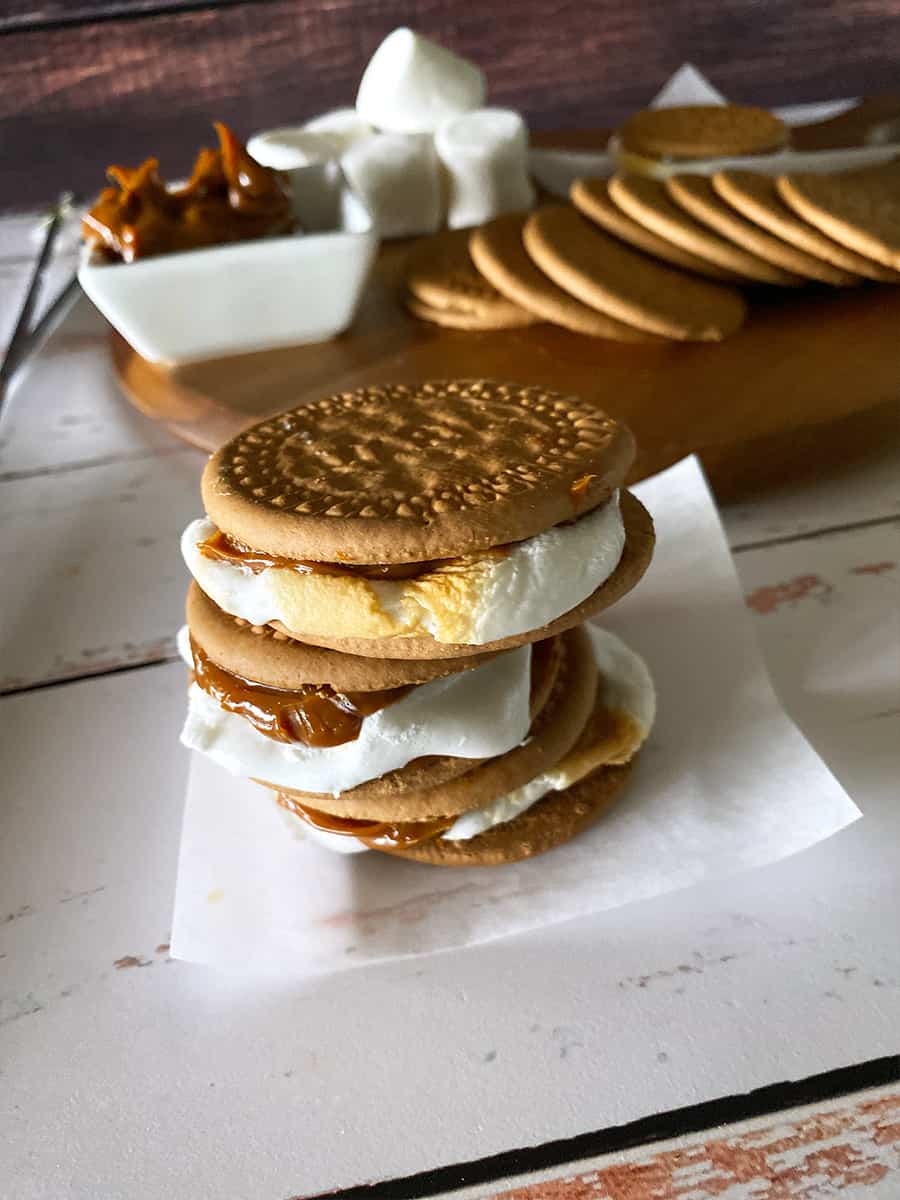
I love this s’mores recipe that combines Cuban favorites like Maria Crackers and dulce de leche. I love the idea of s’mores and the flavor combination of chocolate, marshmallow, and graham cracker. What’s not to love about that? But whenever I bite into a homemade s’more, the end result is too messy, with the melting chocolate and the thickness of the graham cracker. Plus the chocolate bar overpowers the marshmallow flavor. 

I knew I loved the marshmallow sandwich but wanted to find a combination that let the marshmallow flavor come through and was a little less messy to eat. So I turned to two Cuban treats I grew up eating… Maria Crackers and dulce de leche.

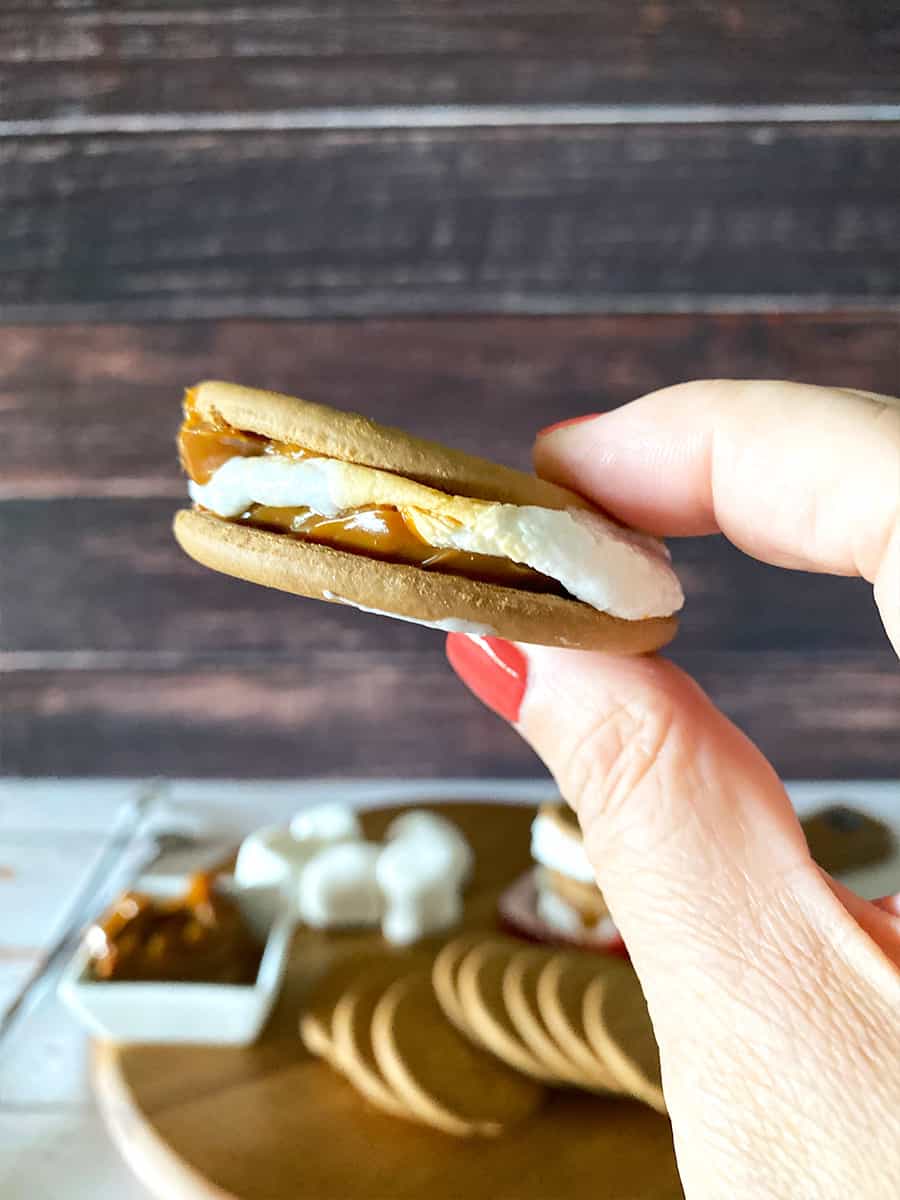
I love this s’mores recipe because the dulce de leche complements the marshmallow. The flavors blend so well together, it’s like a symphony in your mouth! So, so good!!

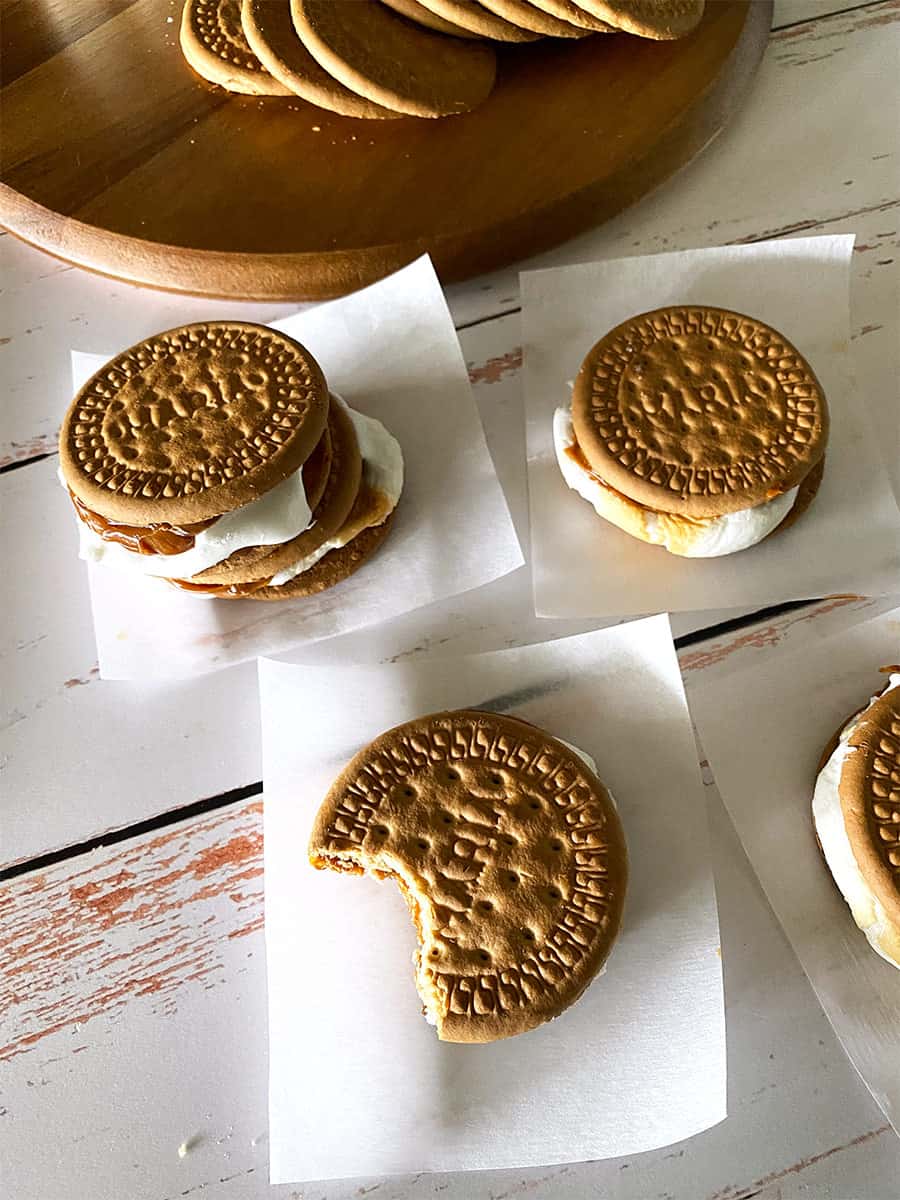
And it’s not messy, so I can eat one without getting it all over my face and clothes. So I can be a kid at heart and still act (somewhat) like a grownup 😉

homemade s'mores

Maria Crackers, My Childhood Favorite

These sweet crackers are a staple in most Cuban kitchens. It’s similar to a graham cracker, but it’s round, thinner, and a little prettier. So they make these homemade s’mores look a little dressed up! Growing up, I used to eat these crackers dipped in sweetened condensed milk, smeared with dulce de leche, or layered with guava and cream cheese. It’s perfect for s’mores! You can find these in the cracker aisle of your local supermarket. Or you can order them online (affiliate link)

What Is Dulce de Leche

This is a popular spread that’s eaten all over Latin America and the Spanish Caribbean islands. It’s made by cooking sweetened condensed milk until it turns brown and thickens to a spread. Oh, it’s so, so good! You can use it on cookies, cakes, crepes, ice cream, your fingers, you name it!

You can find dulce de leche in a can, right next to the sweetened condensed milk. The brand I use is Nestle La Lechera. You can also make your own, but that’s a bit time-consuming. You can make it by baking sweetened condensed milk in a water bath (bain-marie method) or by simmering a submerged, unopened can on the stovetop (you need to make sure the can remains submerged in water). Either way, it takes hours. But you don’t need to go through all that trouble. You can use a can of Nestle dulce de leche for these s’mores. 

homemade s'mores

Origin of S’mores

The first s’mores recipe showed up in the Tramping and Trailing with the Girl Scouts cookbook first published in 1927. But before that, marshmallow roasts had become a popular campfire treat. Also, two other marshmallow treats became popular just before the publishing of this cookbook. 

Mallomars, a graham cookie topped with a mound of marshmallow goodness and dipped in chocolate was introduced in 1913.  I loved these growing up (still do today, actually). Another childhood favorite, introduced in 1917, was the MoonPie. I loved this marshmallow cookie sandwich covered in chocolate. Both of these have all the flavors you find in a s’mores but the ratios are a little nicer and it’s less messy to eat. 

Although s’mores, Mallomars, and MoonPies are similar, the thing that makes s’mores so unique is that they are most often made over a campfire by kids, with adult supervision, of course. There’s just something so fun about roasting the marshmallows and making your own ooey-gooey treat! 

You can learn more about the history of this treat from this very interesting Nation Geo article.

homemade s'mores

From the Campfire to the Barbecue

This s’mores recipe can certainly be made by the campfire, but it’s also easy to make on the barbecue. It’s the perfect treat to share after a backyard barbecue! Just have the marshmallows and skewers handy and everyone can hang around the grill and make their own, or you can play grillmaster and make them yourself and pass them out. 

You can also make this s’mores recipe in advance and enjoy them after your backyard barbecue. If you let these s’mores sit for a while, the Maria Cracker softens and it becomes more like a MoonPie. That’s my favorite way to eat it! 

homemade s'mores

How To Make Homemade S’mores

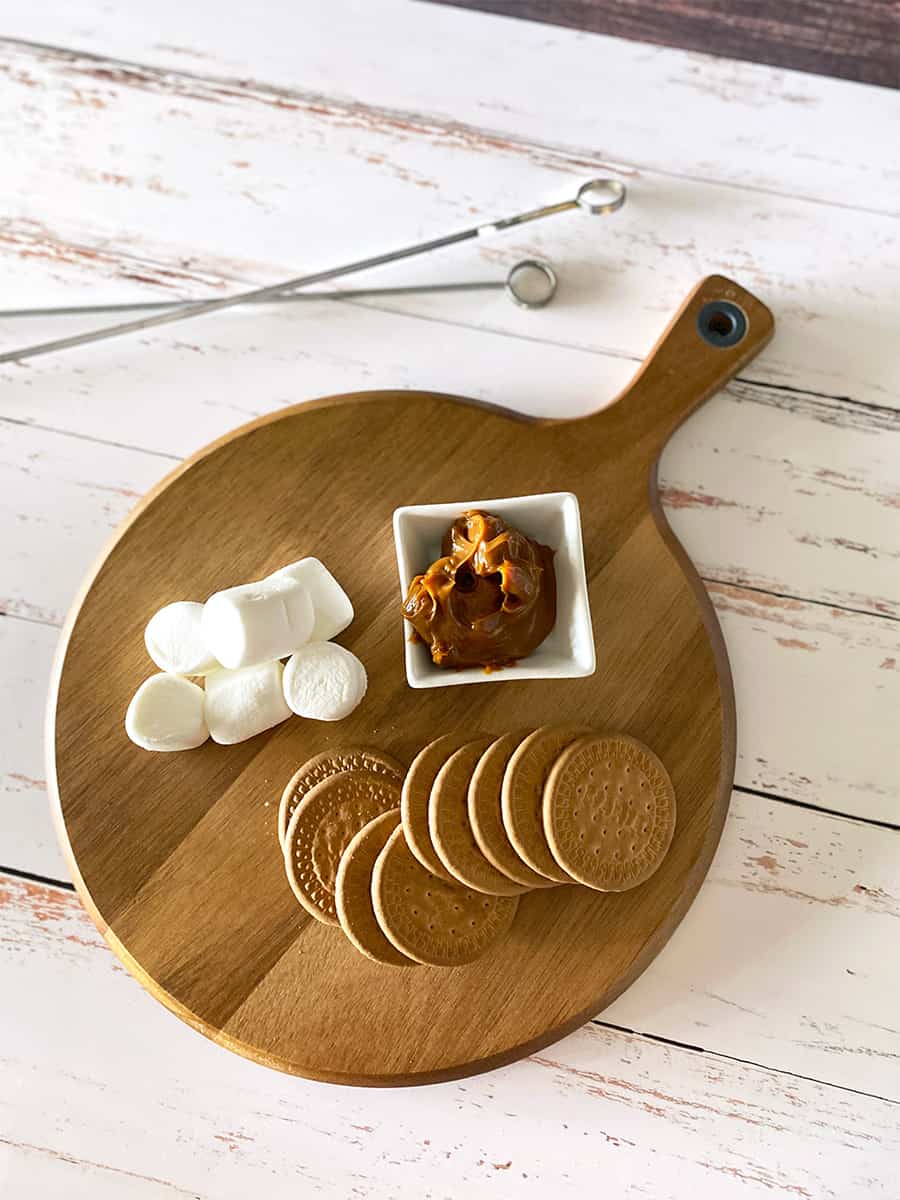
To make these homemade s’mores, you’ll need Maria Crackers, dulce de leche, and marshmallows. 

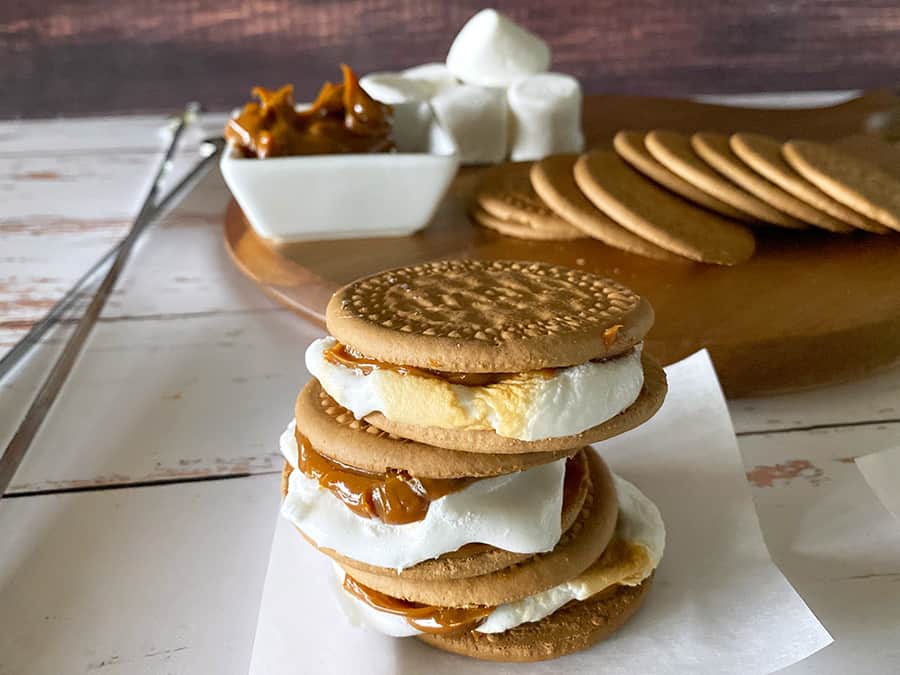
Spread about a teaspoon of dulce de leche on each Maria Cracker. Make sure to spread the dulce de leche on the “bottom” side, so the pretty embossed side is visible in the finished s’mores. They look prettier that way. 

Then roast your marshmallow over the grill, turning it as you go so that all sides get browned. Once the marshmallow is soft and browned on all sides, press between the Maria Crackers.  

Try these for your next backyard barbecue and let me know how they turn out!

If you like this homemade s’mores recipe, you may also like my Homemade Ice Cream Sandwiches with dulce de leche.

Print
clock clock iconcutlery cutlery iconflag flag iconfolder folder iconinstagram instagram iconpinterest pinterest iconfacebook facebook iconprint print iconsquares squares iconheart heart iconheart solid heart solid icon
homemade s'mores

Best S’mores Recipe with Maria Crackers and Dulce de Leche

5 Stars 4 Stars 3 Stars 2 Stars 1 Star No reviews
  • Author: Sandi Abbott
  • Prep Time: 1
  • Cook Time: 2
  • Total Time: 3 minutes
  • Yield: 8 1x
  • Category: Desserts
  • Method: Roasting
  • Cuisine: Cuban

Description

This s’mores recipe combines Cuban favorites like dulce de leche and Maria Crackers for a uniquely Cuban treat!


Ingredients

Scale

16 teaspoons dulce de leche

16 Maria Crackers

8 large marshmallows


Instructions

Spread one teaspoon of dulce de leche on the “bottom” side of a Maria Cracker (you want the pretty embossed side to show). Roast marshmallow on a long skewer over a grill fire for about two minutes (times will vary). Slowly turn the skewer so the marshmallow roasts evenly on all sides. Place the marshmallow on a prepared cracker (dulce de leche side up). Place a second cracker (dulce de leche side down) on top and gently press down. Enjoy!


Notes

You can also make these on the stovetop over a burner set on high, using a long skewer. Slowly turn the skewer so it cooks evenly on all sides. Be careful not to spill the marshmallow on the burner. 

If you let these s’mores sit for a while, the cookie will soften and it will be more like a MoonPie!

Time shown is per s’more. 

Nutrition

  • Serving Size: 8

Best S’mores Recipe with Maria Crackers and Dulce de Leche Read More »
Homemade ice cream sandwich

The Best Homemade Ice Cream Sandwiches With Dulce De Leche

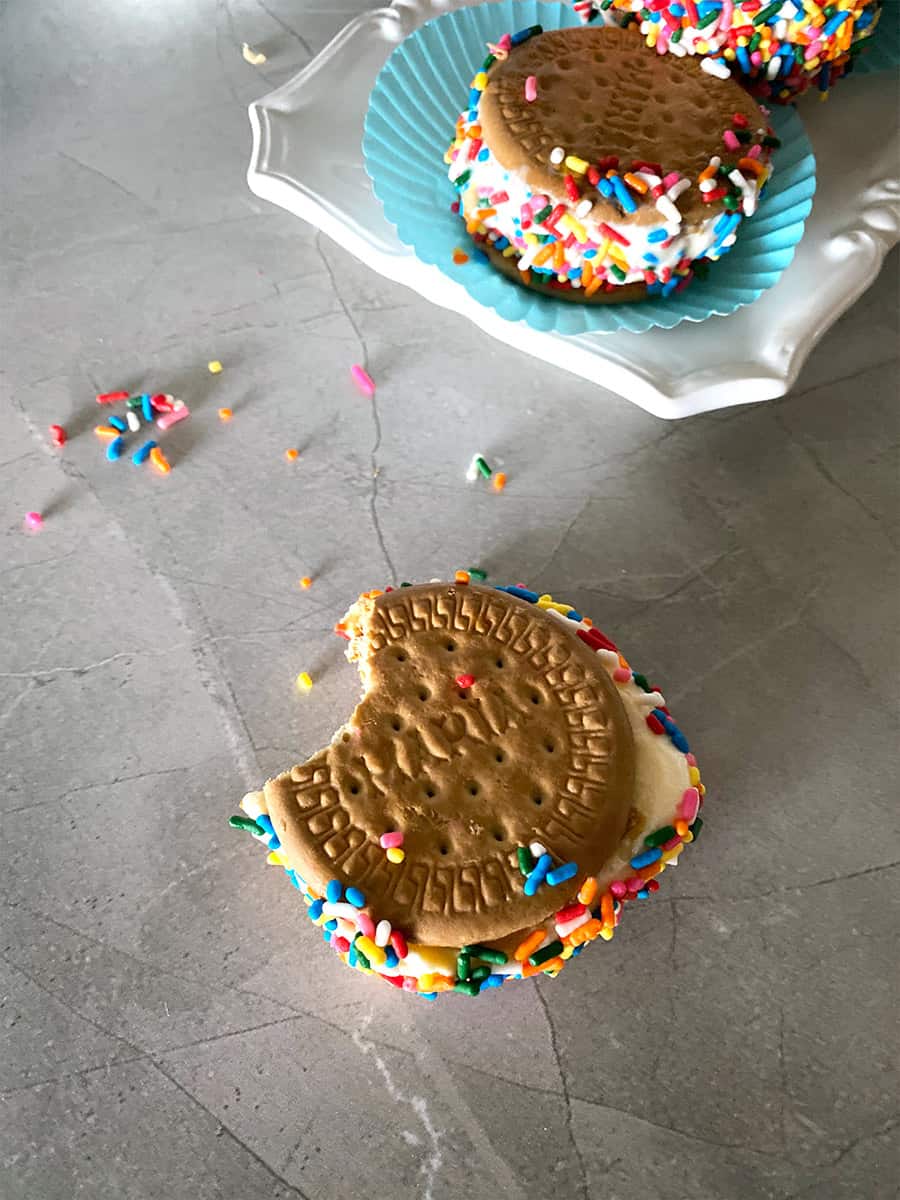
These homemade ice cream sandwiches with dulce de leche are so easy and delicious! And they are fun to dress up for every occasion. Add red, white, and blue sprinkles for your 4th of July picnic. Or dredge them through your favorite ice cream toppings like chocolate sprinkles, mini chocolate chips, toasted coconut, or chopped almonds. The possibilities are endless. When I’m playing dress-up with these homemade ice cream sandwiches, it brings me back to my dress-up Barbie sessions when I was a little girl, no lie. (I was a huge Barbie fan?)

Cuban Flavors I Grew Up Loving

One of the things I love so much about these homemade ice cream sandwiches is that they have two of the flavors I grew up eating… dulce de leche and Maria crackers. 

If you’re not familiar with dulce de leche, it’s similar to caramel but it’s very spreadable and has an even richer taste than caramel. The main difference between dulce de leche and caramel is that dulce de leche is made with sweetened condensed milk, and caramel is made with sugar and water. You should easily find dulce de leche in your grocery store aisle right next to the sweetened condensed milk. The brand I used is Nestle.

To make dulce de leche at home, you bake the sweetened condensed milk in a water bath (bain-marie method) for several hours. Or you can simmer the can on the stovetop fully submerged in water. This process takes a few hours, and you need to keep adding hot water to keep the can fully submerged. But you don’t have to go through all that trouble for this recipe. You can use the store-bought dulce de leche, it’s just as good. 

Maria crackers are the Cuban version of graham crackers. I would eat these crackers spread with dulce de leche or with cream cheese and guava. I like them more than graham crackers because they are thinner and look prettier for desserts. Really, the main reason is that I grew up eating them. But they do look pretty when you use them in these homemade ice cream sandwiches. 

summer dessert

Dulce de Leche and Vanilla Ice Cream Are So Good Together

I also grew up eating ice cream sandwiches made with vanilla ice cream and chocolate wafers, I’m sure we all did. As much as I love that flavor combo, I find the dulce leche and vanilla combo even better! This flavor combo is more subtle than chocolate and vanilla, and builds as you eat it. 

I especially love these little homemade ice cream sandwiches rolled in toasted coconut. They remind me of my favorite cookie, alfajores. These are dulce de leche sandwich cookies made with soft vanilla cookies and dulce de leche filling rolled in crushed toasted coconut. I’m so gonna make these for you one day! But until then, you can check out this New York Times recipe for alfajores, if you’re curious.

Homemade ice cream sandwiches

Easy Ice Cream Sandwich Dessert for Lazy Summers

My little sandwiches are so easy to make, they have only four ingredients and take just a few minutes to prep. But you will want to let them set for a few hours before serving. 

Here’s what you need:

Vanilla Ice Cream – I like using French vanilla because it complements the dulce de leche best. Also, make sure you get one that softens without melting too much. I tried making these homemade ice cream sandwiches with Blue Bell ice cream and as much as I loved the taste, I found the ice cream hard to work with. It seemed to melt without softening. So, the sandwiches would end up looking uneven. My favorite brand to use is Publix premium ice cream, but Breyers would also work. 

Dulce de Leche – this is sweetened condensed milk that’s been cooked until it gets golden brown and spreadable. A little goes a long way, so go easy. I use about two teaspoons per ice cream sandwich. But you can add more or less to taste. 

Maria Crackers – you’ll find these in your grocery store in the aisle with the crackers. If you can’t find these crackers, you can use graham crackers cut in half. 

Sprinkles, Toasted Coconut, or Chopped Almonds – the topping you use will depend on the occasion. I like using the toasted coconut or toasted almonds because it’s so good together and looks elegant, like a grown-up dessert. But it’s also fun to use sprinkles and would also have more kid appeal. You can also add sprinkles to mark a holiday, like red and pink for Valentine’s Day, red, white, and blue for Memorial Day and the 4th of July, or Orange and Yellow for the fall. 

Assembling These Ice Cream Sandwiches 

I have more detailed instructions in the recipe below. But here’s a quick rundown.

You need to work quickly because ice cream melts fast and you don’t want a cold mess on your hands. So, prep the sprinkles and have everything handy before you take the ice cream out of the freezer. Also, have a ready container you can add the sandwiches to so you can put them back in the freezer. 

Here we go:

  • Have your sprinkles, almonds, or toasted coconut ready in a bowl. 
  • Take the ice cream out and let it soften as you prep the Maria crackers.
  • Spread about one teaspoon of dulce de leche on each Maria cracker, on the “bottom” side. You want the pretty embossed side to show in your finished ice cream sandwich. 
  • Once all the cookies are prepped, add one scoop to half the crackers and then place a second cracker on top and gently press down.
  • Roll the edges in the sprinkles or other topping.
  • Place these back in the freezer to let them set. This will allow the Maria cracker to soften and the ice cream to harden so it’s not a melting mess when you eat it. Although, a melty mess is not so bad if you’re a kid and there’s a water hose nearby!

Have fun making these little homemade ice cream sandwiches and let me know how they turn out in the comments below. 

Print
clock clock iconcutlery cutlery iconflag flag iconfolder folder iconinstagram instagram iconpinterest pinterest iconfacebook facebook iconprint print iconsquares squares iconheart heart iconheart solid heart solid icon

Homemade Ice Cream Sandwiches With Dulce De Leche

5 Stars 4 Stars 3 Stars 2 Stars 1 Star No reviews
  • Author: Sandi Abbott
  • Prep Time: 25
  • Total Time: 25 minutes
  • Yield: 12 1x
  • Category: Dessert
  • Method: no bake
  • Cuisine: Cuban

Description

These homemade ice cream sandwiches with dulce de leche are so easy and delicious! And they are fun to dress up for every occasion! Add your favorite sprinkles for garnish or use toasted coconuts or chopped almonds.


Ingredients

Scale

A gallon of French vanilla ice cream (you’ll need about 3 cups of ice cream for 12 ice cream sandwiches)

1 can dulce de leche (you’ll need about a half cup)

24 Maria crackers

1 cup of sprinkles, almonds, or shredded coconut for garnish


Instructions

Prep the garnish:

You want to have a bowl of these ready before you start since the ice cream melts so fast. So, toast and chop the almonds. Or, toast the coconut and crush them a bit to make smaller pieces. If you’re using sprinkles, just pour these into a small bowl. 

Make sure you have a container already set up to store the ice cream sandwiches. The first time I made these, I had to scramble to find something while my babies were melting!

Prep the crackers:

Take the ice cream out so it starts to soften. You can’t press it down if it’s too hard.

Spread about one teaspoon of dulce de leche on each Maria cracker, on the “bottom” side. You want the pretty embossed side to show in your finished ice cream sandwich. 

Assemble the ice cream sandwich:

Once all the cookies are prepped, add one scoop to half the crackers and then place a second cracker on top and gently press down. Then roll the ice cream sandwiches in the sprinkles or other garnish. If you find that they are melting too fast. Place in the freezer to set and then roll in the sprinkles after the ice cream has set.


Notes

A gallon of ice cream and a can of dulce de leche will yield way more than 12 ice cream sandwiches, so feel free to make more. Just make sure you increase the amount of Maria crackers and sprinkles you buy to accommodate a larger quantity.  

You’ll find the assembly to be a bit of a messy process and the ice cream sandwiches may not look perfectly even. This is the beauty of the sprinkles. They cover a multitude of mistakes! Once you garnish, they’ll look pretty, and any imperfections will be unnoticeable. 

I used a medium ice cream scoop that holds just a little less than a quarter cup of ice cream. If you use a bigger scoop the ratio of ice cream to cookie will be off (unless that’s how you like it). 

You can mix and match the garnish and make different ones to please your crowd. 

Nutrition

  • Serving Size: 1 sandwich

The Best Homemade Ice Cream Sandwiches With Dulce De Leche Read More »
caramel

Cuban Flan Is The Best Cuban Dessert!

Cuban flan is, hands-down, the most popular Cuban dessert, and for a good reason. It’s a luscious, creamy, special-occasion-worthy dessert that is super easy to make. This is the dessert that’s on every Cuban table on Christmas Eve (Noche Buena). 

This is my Cuban mom’s flan recipe, and she makes it often. With my mom (aka the Bean Train), if you’re sick you get chicken noodle soup, and for all other occasions, you get a Cuban flan. If it’s your birthday, you get a flan, if it’s your anniversary, you get a flan, and if she’s coming over for dinner… another flan! All her neighbors get this Cuban dessert for Christmas, and I’ve got to tell you, it’s made her pretty popular on her block!

cuban flan

What Is Flan?

If you’re not familiar with it, caramel flan is a creamy dessert made with two types of milk, eggs, and vanilla and has a delicious caramel sauce made with sugar. It’s like Crème Brulee but it does not have the hard sugar crust on top. The caramel is baked with the dessert and becomes this rich sauce that bathes the creamy dessert in delicious sweetness. It’s so, so good, I can’t wait for you to try it! Of all the Cuban recipes you can make, this Cuban flan recipe is the one to try first!!

Cuban Flan Recipe

As I said, this caramel flan is super easy to make. You don’t need to mix anything and there are only five flan ingredients in this Cuban flan recipe: sweetened condensed milk, evaporated milk, eggs, vanilla, and salt. You can mix these ingredients by hand or just throw them in the blender for 30 seconds. 

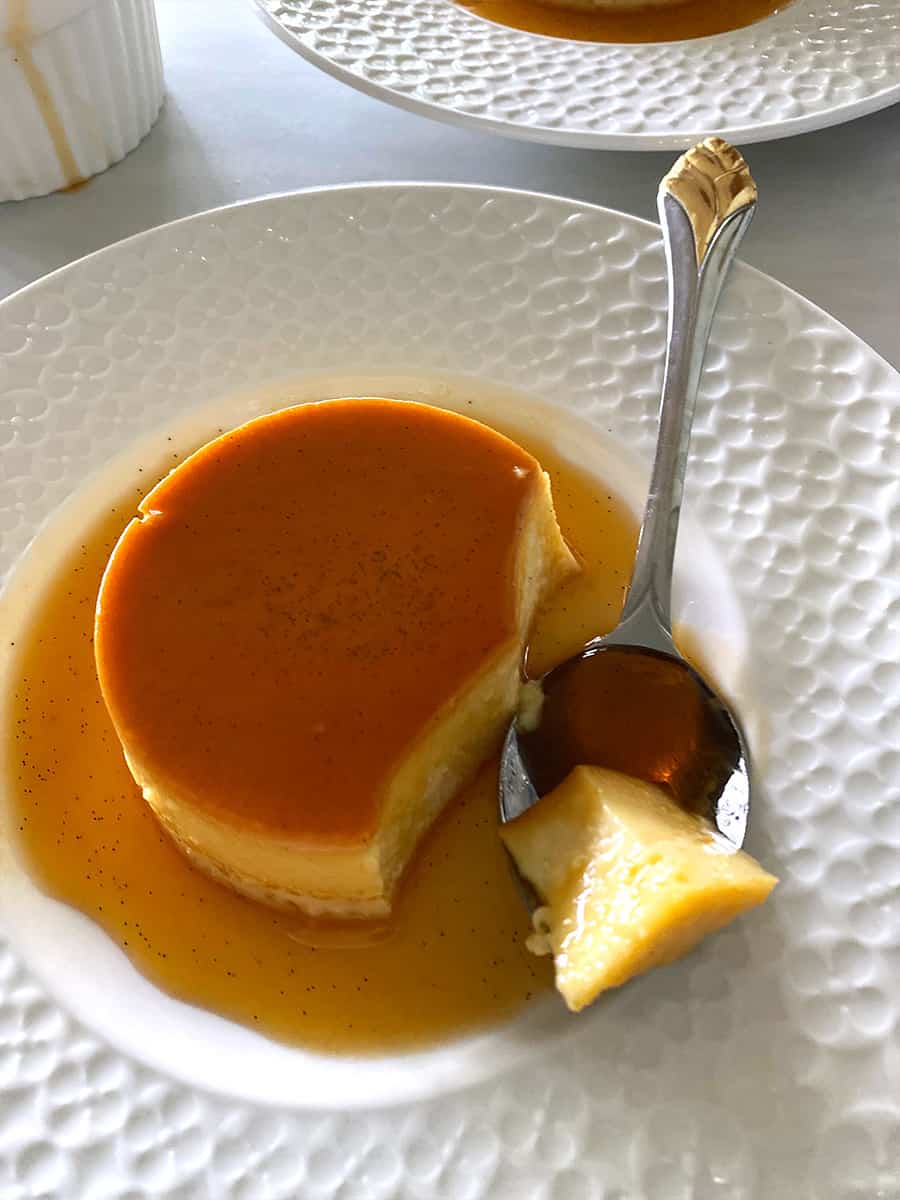
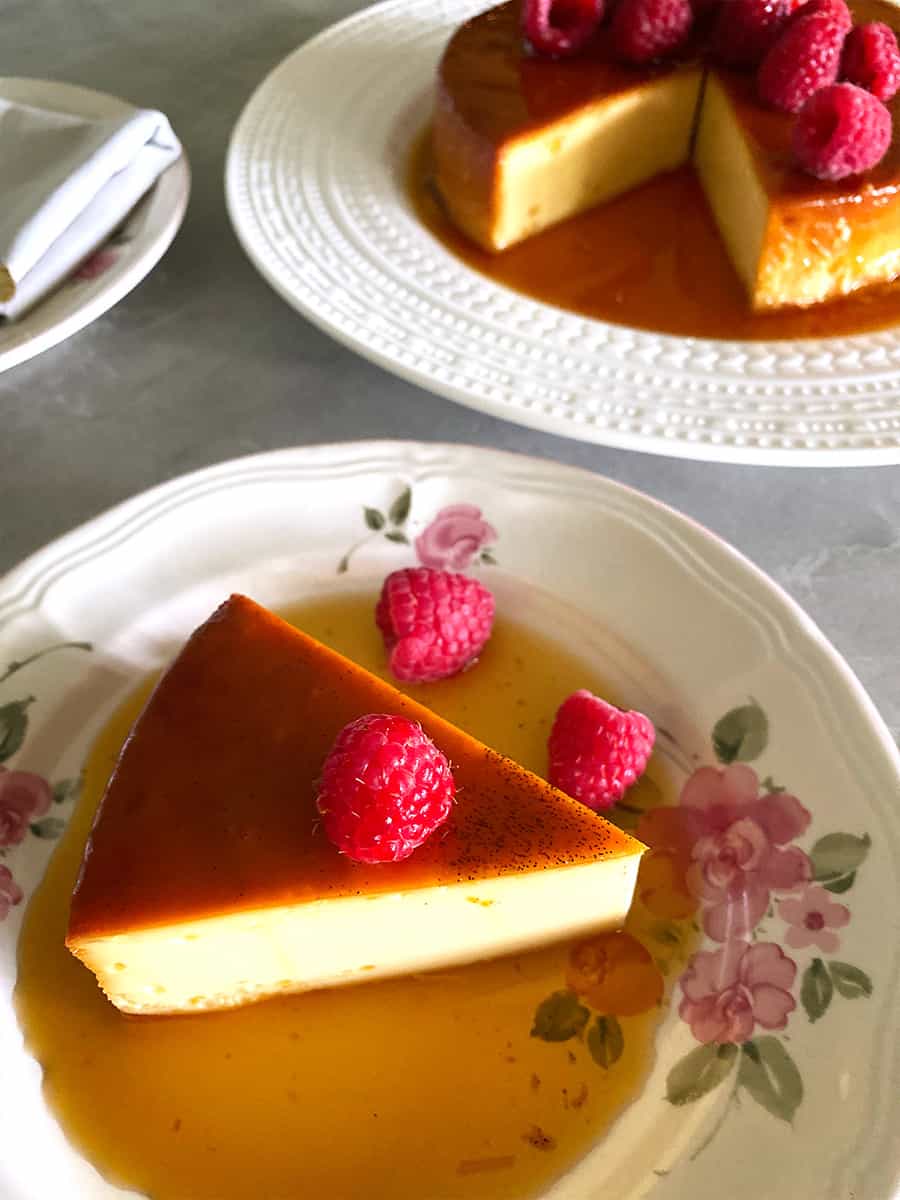
I like to use vanilla paste because I think it gives your baked goods a richer taste, but regular vanilla is fine. When you use the paste, you get more of the vanilla beans in the dish. You’ll notice it in the sliced flan. Sometimes it may leave a mark on the surface of the cake as the beans settle to the bottom of the flan and then when you invert it, you’ll see it. I usually garnish my flan with some raspberries so it’s not noticeable, but you can see it a bit in the sliced flan photo in this post.

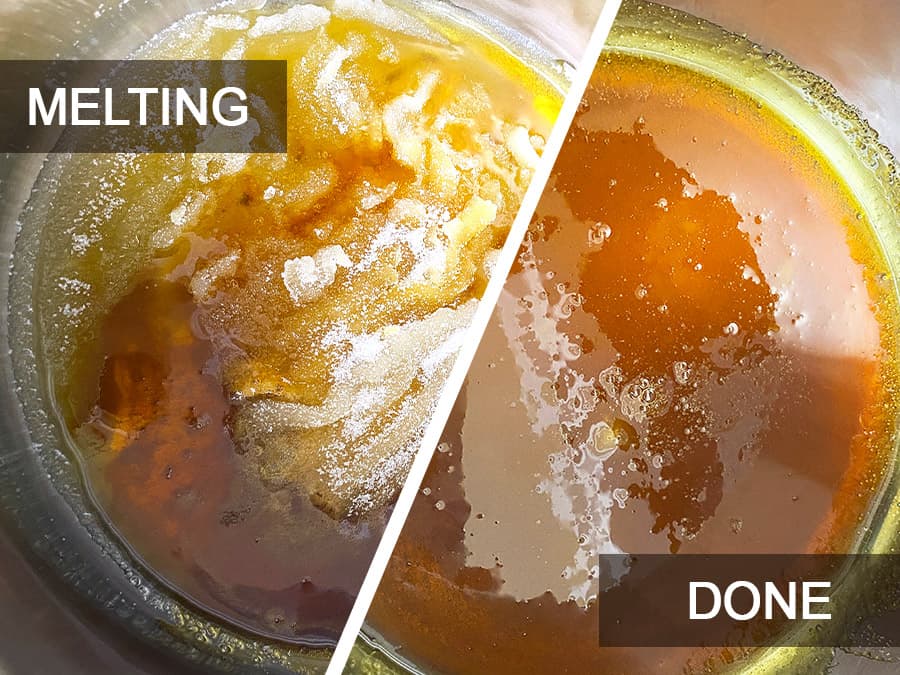
The caramel is also super easy to make, as it’s just melted sugar. Some folks like to mix water and sugar and heat this on medium heat until the caramel forms. But I find this method takes longer and you must be careful to not overcook the caramel. It’s much easier to melt a cup of sugar over medium high heat. Once all the sugar has melted, you’re at the right caramel color and it takes a fraction of the time. 

Two things you need to know about caramel… don’t stir the caramel in the pan. That will keep it from forming. You just shake the pan a little to swirl the sugar as it’s melting. Also, the caramel is SUPER HOT and can burn you if you’re not careful. Don’t use plastic spoons or other plastic utensils near it and be SUPER CAREFUL when pouring it in the mold. 

caramel flan

How To Make Cuban Flan

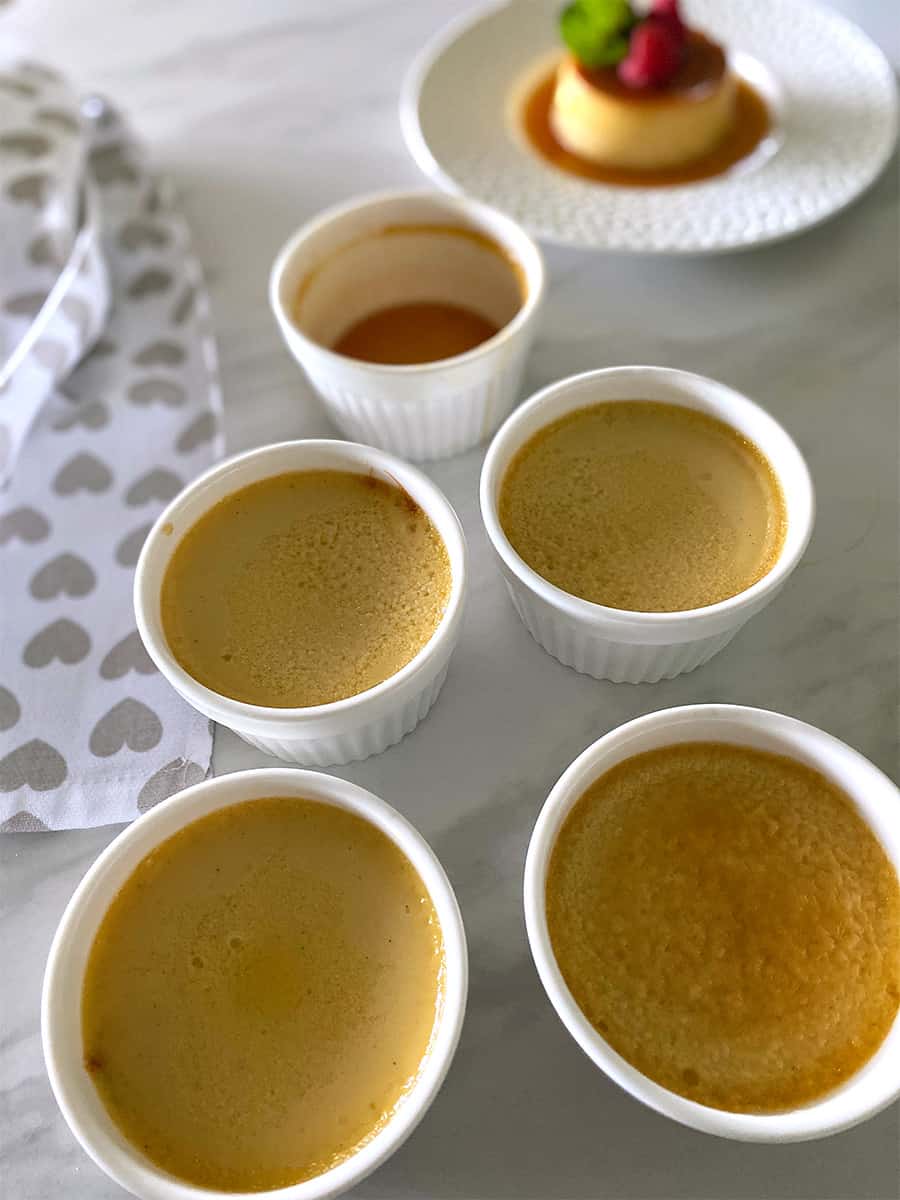
Caramel flan cooks in the oven in a water bath called a bain-marie. You can pour the flan in half-cup ramekins for individual portions or bake in a pie plate or cake pan. You need to make sure to pour enough water to reach about halfway up the sides of the flan mold. 

Baking times will vary depending on the container you use. Ramekins take under 30 minutes the pie plate or cake pan make take you around an hour of baking time.  

Once they’re done, let them cool at room temperature and then place them in the fridge for four hours or overnight. Run a sharp knife around the edge to invert it on a plate and give it a light tap.

If you baked it in one pie plate or cake pan, the weight of the flan will make it easy to unmold. If you used the individual ramekins, you need to have a little patience or gently coax it out with the edge of the knife, but be careful not to mar the smooth surface of the flan. 

Once you’ve unmolded the flan, pour the rest of the caramel sauce over the flan and garnish it with a few raspberries and a mint leaf. 

cuban flan

Instant Pot Flan

You can also cook the flan in the Instant Pot. You’re still using the bain-marie method, though. To be able to cook it in the Instant Pot you’ll need a flan mold with a lid called a “flanera.” You can find these at many supermarkets. I bought mine at my local CVS pharmacy that sells some Latin cookware (yea, I know, only in Miami!). You can also find these on Amazon.

Instant pot flan cooks in just 25 minutes, but there’s the time it takes for the Instant Pot to develop pressure and then you need to give a few minutes to release the steam before you open it.

The flan mold creates a nice, tall cake. I personally like this method because it’s so foolproof. You don’t have to check the flans for doneness. This also gives you better portion control so you can cut smaller slices if you have more people. 

But I do love the way the individual caramel flans look, they are so cute!

Try this Cuban flan recipe the next time you’re thinking of baking a cake for a special occasion. Or make it just because you want to indulge. You can’t beat how easy this Cuban recipe is to make!

Print
clock clock iconcutlery cutlery iconflag flag iconfolder folder iconinstagram instagram iconpinterest pinterest iconfacebook facebook iconprint print iconsquares squares iconheart heart iconheart solid heart solid icon
Cuban flan recipe

Caramel Flan – Traditional Cuban Dessert

5 Stars 4 Stars 3 Stars 2 Stars 1 Star No reviews
  • Author: Sandi Abbott
  • Prep Time: 20
  • Cook Time: 60
  • Total Time: 1 hour 20 minutes
  • Yield: 8 1x
  • Category: Dessert
  • Method: Baking or Instant Pot
  • Cuisine: Cuban

Description

This caramel flan is a very traditional Cuban dessert. It’s a luscious, creamy special-occasion-worthy dessert that is super easy to do. What makes this dessert so awesome is the fantastic one-ingredient caramel sauce. And this Cuban flan recipe could not be easier to make!


Ingredients

Scale

1 can sweetened condensed milk (14 ounces)

1 can evaporated milk (12 ounces)

5 eggs

1 teaspoon vanilla

pinch of salt

1 cup sugar


Instructions

CARAMEL

Make the caramel:

  • Place 1 cup of sugar in a medium saucepan on medium heat. Cook without stirring until sugar melts and has a deep amber color. This should take about 12-14 minutes. Be very, very careful with the flan as it’s SUPER HOT and can burn you. 
  • For Ramekins: Use a regular soup spoon and divide the caramel equally into 8 half-cup ramekins.  Do not use a plastic measuring spoon for this because it will melt. Swirl the caramel around the ramekin to coat the sides just a bit. 
  • For pie plate, cake pan or flan mold: Pour all the caramel and swirl the pan a bit to get it up the sides a little. You need to work fast because the caramel hardens quickly, BUT be very careful not to spill the caramel or to touch the pie plate or cake pan where the caramel will be because it will burn you. I cannot stress this enough.
  • Once the caramel has hardened, brush a little vegetable oil on the exposed areas that don’t have caramel. This should make it easier to unmold the flan later. 

Preheat: Preheat the oven to 325 degrees, if you’re baking. 

Mix: Pour the cans of milk into a blender. Add the five eggs, a teaspoon of vanilla and a pinch of salt. Blend on low for about 30 seconds. 

Bain-marie: Place your flan container (ramekins, pie plate or cake pan) in a large roasting pan with deep sides and fill the pan with water up to halfway mark on the container. If you’re using the Instant Pot, you’ll add the water last. 

Strain: 

  • Strain the mix to make sure no eggshell or solids end up in your flan. 
  • For the ramekins, strain the flan into a 4-cup measuring bowl or pitcher. This will make it easier to pour into the ramekins. Otherwise, you can ladle the mix up to 4-ounce measurement or just up to the indent area. You can see it in the photo above in the post. 
  • If you’re using a pie plate, cake pan or flan mold, you can strain the mix right into the container. 

Bake:

  • Baking times differ based on the container that you use. 
  • For the ramekins, bake at 325 degrees for 25-30 minutes. You want the edges to be set and the middle to jiggle just a bit. The top should be a pale gold.
  • For the pie plate or cake pan, cook for about 1 hour or until the edges are set and the middle jiggles just a bit. 

Instant Pot affiliate link or Pressure Cooker:

For the Instant Pot, you’ll need to use a special flan mold affiliate link. Place the covered flan mold in the pot and add water until it’s half way up the sides of the flan mold. Set the timer to 25 minutes at normal pressure. Once done, let it vent on its own. If you’re not going to let it vent on its own, cook for 30 minutes. 

Cool: Let the flan come to room temperature and then cool in the refrigerator for 4 hours or overnight.

Unmold:

  • Run a sharp paring knife around the edge and then invert the container onto a plate. The large molds unmold easily because the weight of the flan helps. 
  • For the ramekins, it’s a little more difficult. I usually  place the ramekins in a pan with warm water for 30 seconds to make it easier to unmold. Sometimes you need to nudge it a little with the knife, but be careful not to leave a mark on the flan. They look so pretty when they’re unmolded. 
  • Pour the rest of the caramel sauce over the flan on the plate. 

Garnish (optional): Top the flan with a few raspberries. I also use a mint leaf on the individual portions. 


Notes

The caramel will baked onto the flan mold affiliate link or ramekins affiliate link and it looks impossible to remove. But just soak the container in water and the sugar will dissolve. 

Nutrition

  • Serving Size: slice

Cuban Flan Is The Best Cuban Dessert! Read More »
Cuban Tapas Recipes

Cuban Appetizers To Make For World Tapas Day

Tapas are the best party food, and I can’t think of a better way to celebrate World Tapas Day than with these delicious Cuban appetizers. This is one holiday that’s totally worth celebrating because it’s just made for hanging out with friends, drinking wine, and noshing on party food. So, let’s get the party started with these fun and delicious Cuban appetizers.

World Tapas Day is either June 16 or 17, depending on the calendar you follow. But you can celebrate it anytime you feel like it. I like to celebrate it every month. And I’m sharing some of my favorite Cuban tapas recipes to help get you in tapas party mode.

Spanish Tapas Montaditos

I love, love, love montaditos and you will too when I ‘splain what they are. These Spanish tapas are made of little baguettes filled with delicious meats, cheeses, and other sweet and savory goodies. The Spanish root word for montadito is montar which means to mount. So, these little pieces of bread are mounted with tons of delicious toppings. I like to think of them as my little bread canvas where I can get creative and inventive. Here are two fun Cuban tapas recipes to try.

ropa vieja sandwich

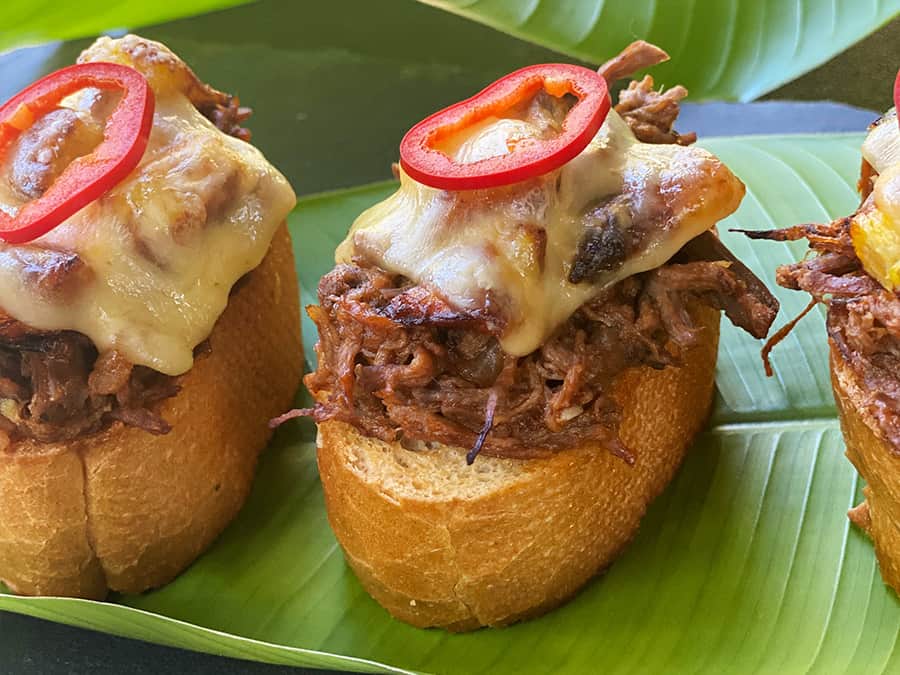
Cuban Ropa Vieja Montaditos

These impressive little Cuban ropa vieja appetizers are perfect for a tapas party! They come together quickly and can be assembled and finished later. If you don’t have ropa vieja leftovers, you can get the recipe here and enjoy it for dinner the night before. If you don’t have ropa vieja, you can try pulled pork, or use whatever leftovers you do have on hand. Top with a little cheese and olive, pepper, or a little spicy sauce. 

smoked salmon avocado toast

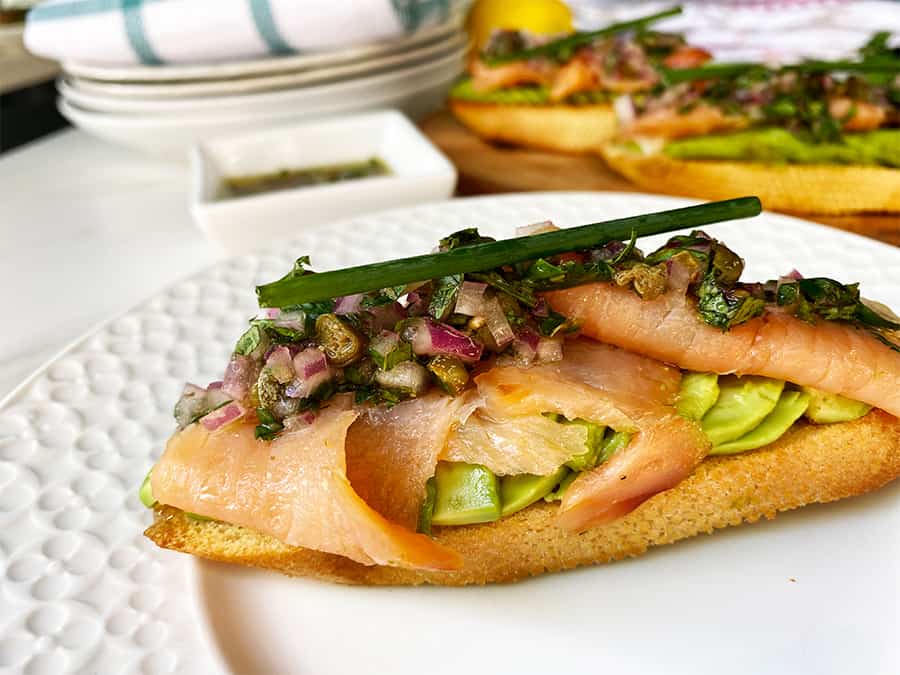
Smoked Salmon Toast (Montadito)

I called this recipe Smoked Salmon Toast, but you can also call it a montadito. These smoked salmon toasts are an easy Cuban tapas recipe to make and requires no cooking. Smoked salmon and avocado piled high on a crostini with a lemon and caper gremolata is the perfect dish for breakfast, brunch, or a tapas party. Now, I know these are technically not Cuban, but they are made by a Cuban, and avocado toast is a Cuban thing anyway… we were eating avocado toast (aka pan con aguacate) way before it was trendy ??❤?

Grilled Sausage And Peppers Montaditos

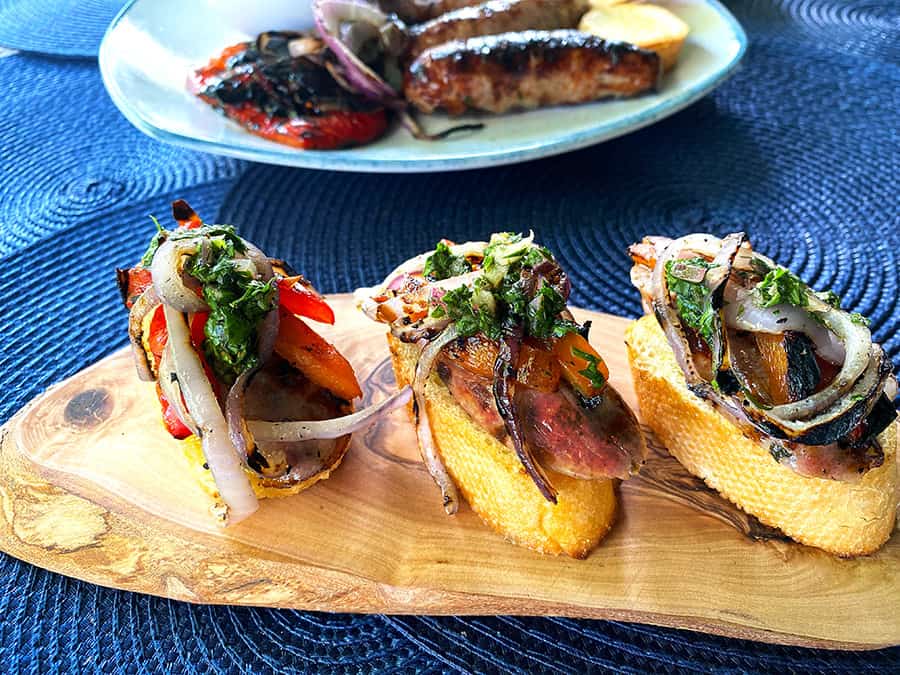
These little grilled sausage and peppers montaditos made with Argentinian sausage are perfect for summer grilling! Enjoy a glass of sangria as you’re grilling this summer. They can be a starter for an epic summer barbecue or part of a no-fuss tapas party. They are so satisfyingly delicious and fun to make! 

Pan Con Tomate

Pan Con Tomate Traditional Spanish Tapas

This simple and delicious Pan Con Tomate is a traditional tapas recipe that’s super quick and easy to make. It requires no cooking and can really be done with just the four basic ingredients in ten minutes tops. Try it with a little prosciutto, wine and cheese. You’ll love, love it!

chicken croquettes

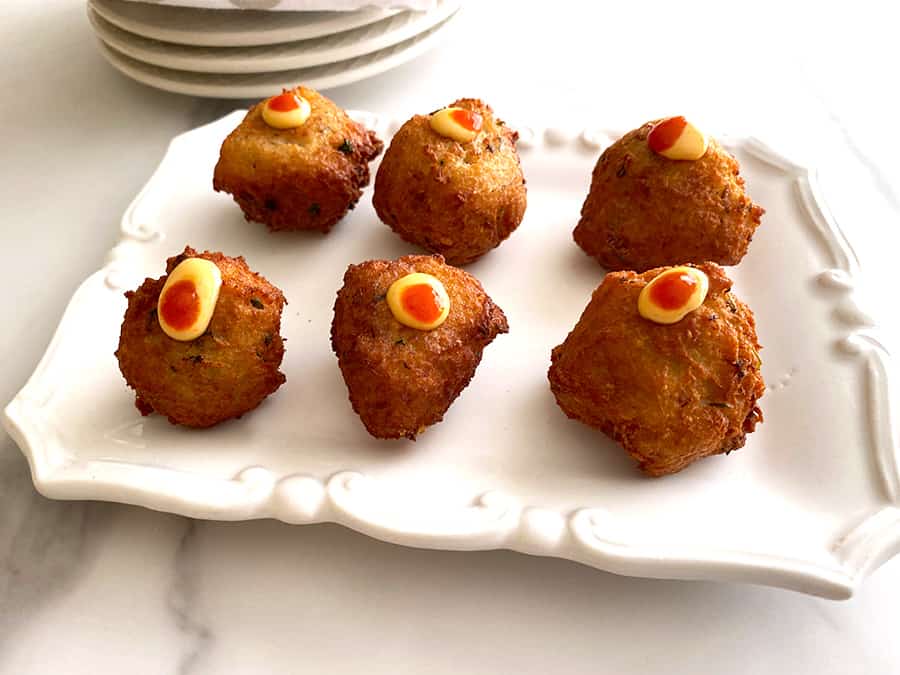
Chicken Croquettes Are Party Platter Favorites!

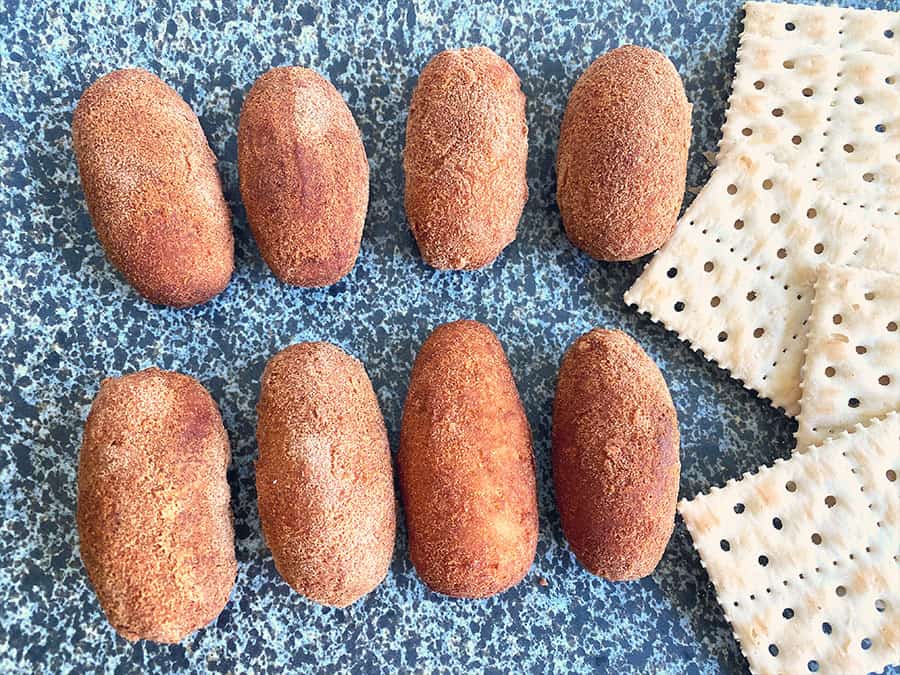
Chicken croquettes are party animals! They are the life of every Cuban party and it’s no wonder. Croquettes are crunchy on the outside with a creamy chicken filling made with béchamel sauce. They are also great as a snack or for breakfast. You can switch things up by swapping the chicken filling with ham or fish. So perfect for tapas!

Cuban Appetizers with Leftover Picadillo

I love to turn my leftovers into tapas party food, especially Cuban picadillo. It’s the perfect filling for tons of Cuban appetizers, like empanadas and stuffed tostones cups. Oh, and quesadillas… not a Cuban appetizer but in the Latin family ?

beef and cheese empanadas

Beef Picadillo Empanadas

These cheesy ground beef empanadas are a very popular Cuban appetizer that’s easy to make and can be fried or baked. I filled these empanadas with picadillo, but you can try other savory fillings. Ropa vieja (used in the montadito recipe above) would also be great here. 

Cheesy Ground Beef Quesadillas

Picadillo Ground Beef Quesadillas

Quesadillas are another great canvas for creating delicious tapas. I love using my leftover picadillo to make these cheesy ground beef quesadillas, but you can use any leftovers you have on hand. That’s one of the many things I love about quesadillas! Just open up your fridge and pull out your leftovers, a little cheese, some peppers, and onions and you got the makings of some great party food. 

Cuban appetizers

Stuffed Fried Plantain Tostones Cups

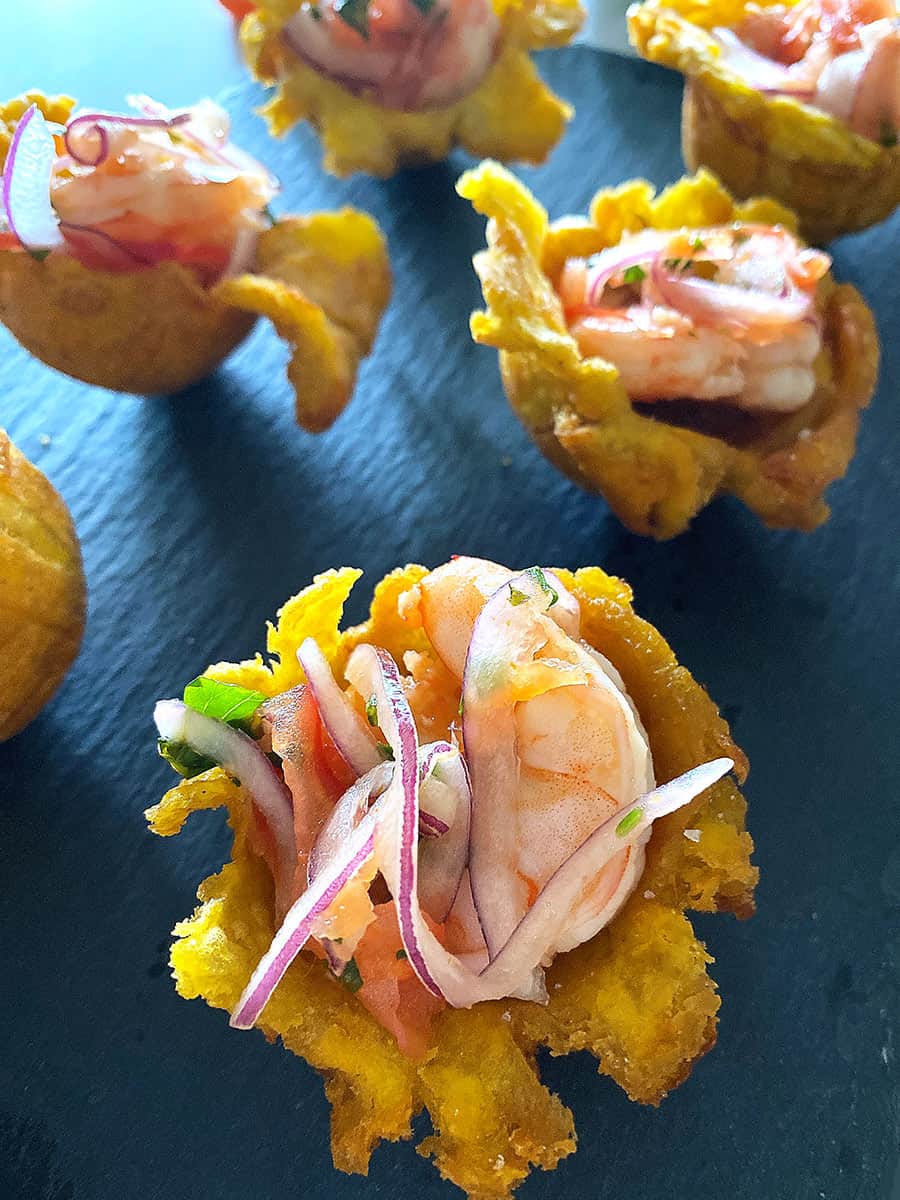
Tostones are twice-fried green plantains and a go-to side dish for many Cuban dishes. But they can hold their own as a Cuban appetizer, especially if you turn them into tostones cups. Follow my tostones recipe to make these fun little cups and then you can fill them with picadillo or ropa vieja topped with cheese. Or fill them with shrimp ceviche cocktail.

Crunchy Malanga Fritters Are Great As An Appetizer or Side Dish

These malanga fritters (aka frituras de malanga) are a super crunchy cuban appetizer perfect for tapas. If you’re not familiar with malanga, it’s a root vegetable that’s creamier and more nutrient-dense than potatoes. They are great on their own, with a little dipping sauce or as a side for soups, stews or salads.

shrimp ceviche cocktail

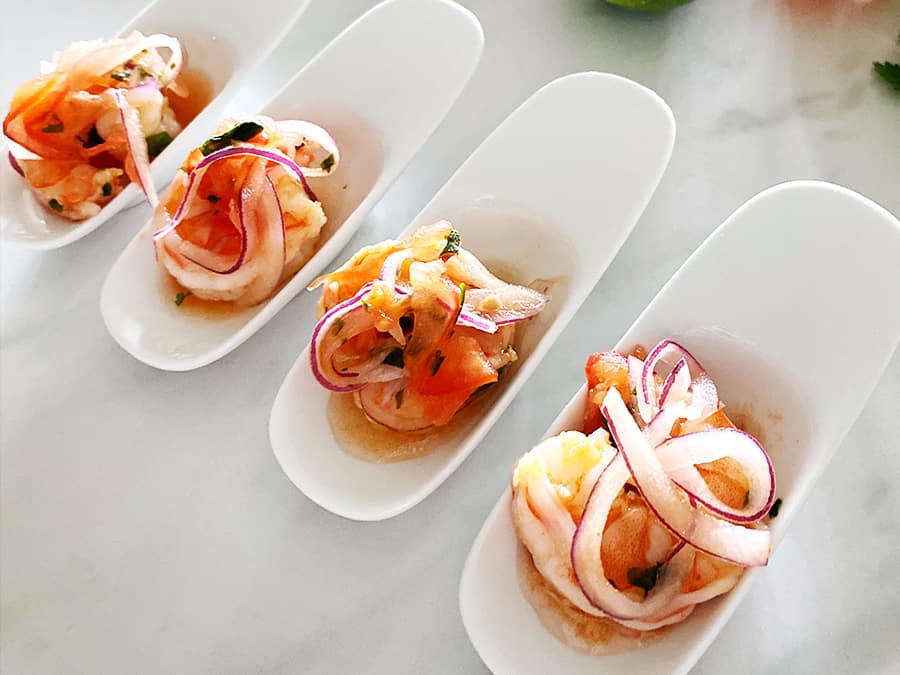
Shrimp Ceviche Cocktail

This Shrimp Ceviche Cocktail recipe is easy to make and is a great, refreshing appetizer for summer parties! I like to serve them with plantain chips or tostones cups, but they are also wonderful with tortilla cups. Ceviche is a popular Latin American appetizer and is usually made with lime juice, onions, and peppers. This version has a tomato base and spicy habanero peppers for a little heat.

Cuban Deviled Eggs

Cuban Deviled Eggs

These Cuban deviled eggs, or huevos endiablados, are made with saffron. This Spanish spice is usually used to make paella and adds a subtle and distinctive flavor to this classic deviled egg recipe. Top it with bacon or a Spanish olive and they make a great appetizer for your next tapas party. 

Now no tapas party would be complete without a pitcher of sweet sangria. Make a pitcher to enjoy with the great apps by using my Fruity Sangria recipe.

So, now that you’re fortified with some great Cuban tapas recipes and a pitcher of sangria, go forth and party. 

Cuban Appetizers To Make For World Tapas Day Read More »
Cuban Tostones

Cuban Tostones Are Great As A Side Dish or Appetizer

I love tostones! They are my favorite way to eat fried plantains. I love how every bite gives you a mix of salty crunch and tender plantain flavor that complements so many other flavors. Tostones taste so, so good with savory toppings or a tangy, citrusy dipping sauce like chimichurri. Or paired with popular Cuban dishes like paella or picadillo

Cuban Plantains

What’s A Plantain? 

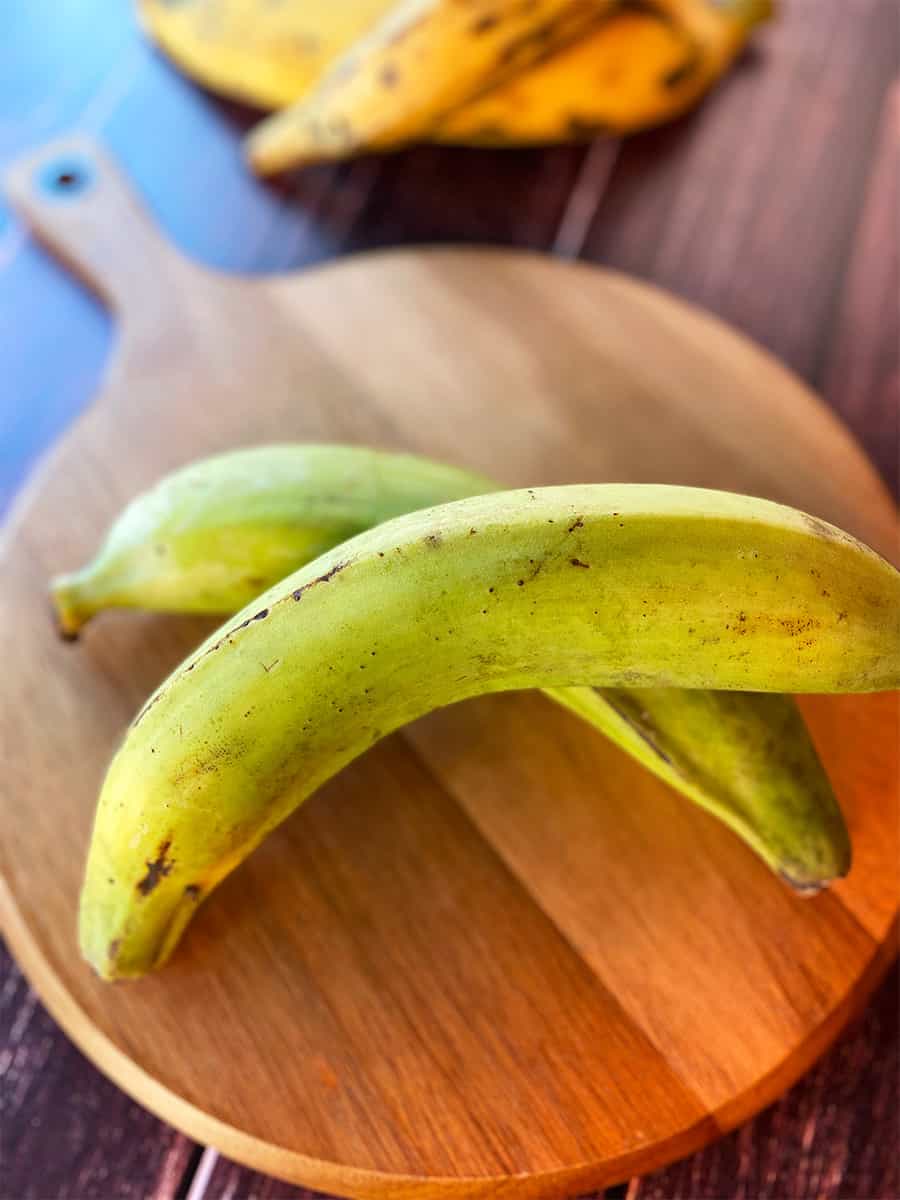
Before I get too far along, I want to make sure you know what a plantain is. Plantains look a lot like a banana, but they are bigger and need to be cooked before you can eat them. They are grown all over South and Central America and the Caribbean, and it’s a staple of both Latin and Caribbean diets. You can learn more about Cuban plantains in my Why I Love Cuban Plantains post.

Maduros vs. Tostones

The two most popular ways to enjoy plantains are when they are green and are twice-fried to make tostones. Or when they are super ripe and turned into maduros. It seems most folks prefer one or the other. In my house, we’re evenly split between the two. But if you have a sweet tooth, you’ll definitely want to try making maduros. 

For me, tostones are the best. Especially because you can shape them into little tostones cups that can be filled with just about anything you find delicious, like ceviche or ropa vieja

Fried Plantains

How To Cook Tostones

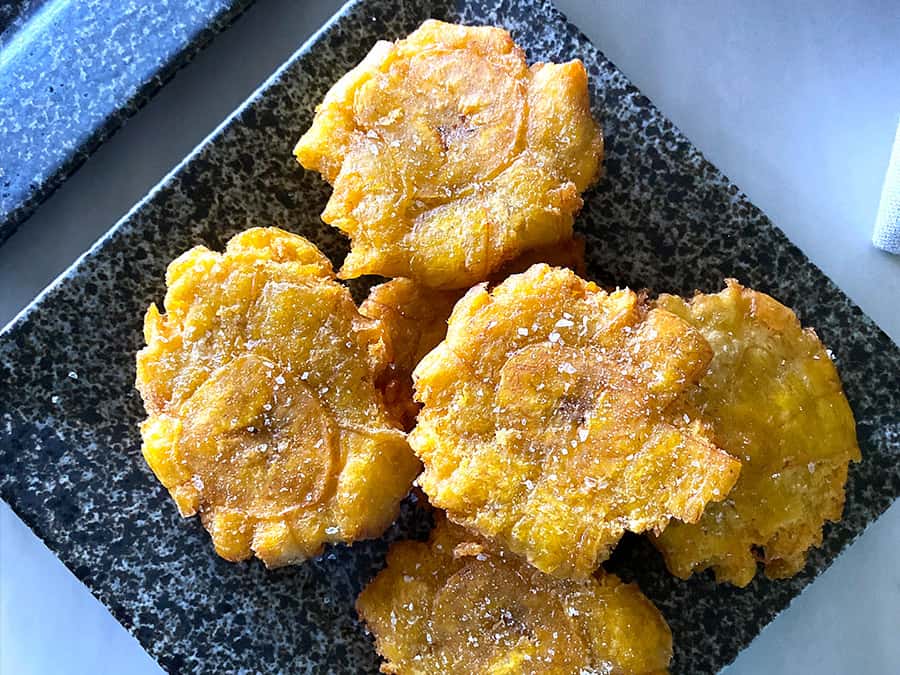
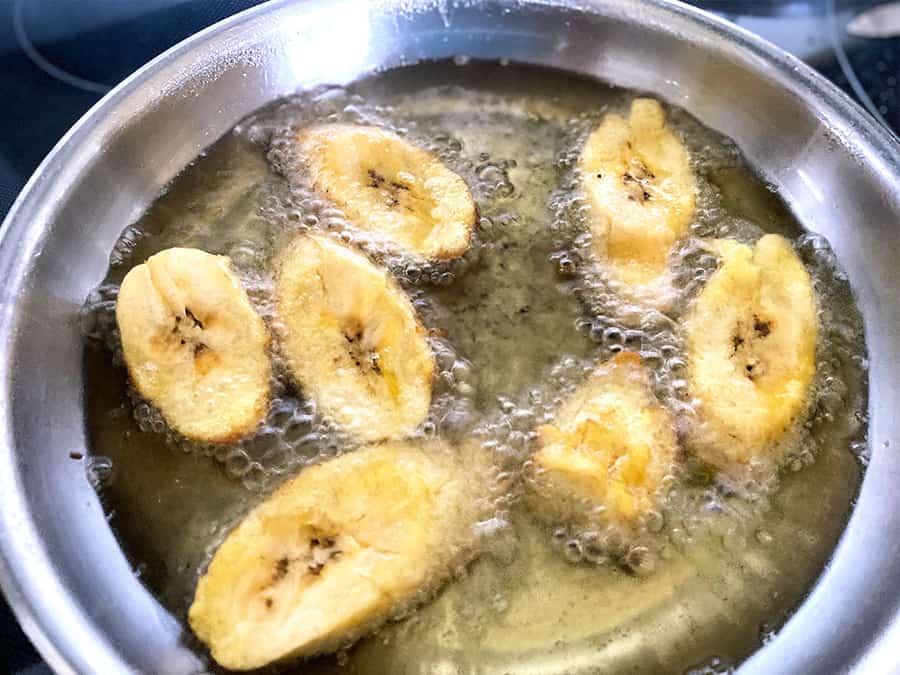
Tostones are twice-fried and mashed into discs. They’re made with green plantains. Because they are unripe, the flesh tends to be really hard. So you need to first blanch the plantains by frying them in low heat. Once they are soft enough to pierce them with a fork, you can mash them and then turn up the heat and fry until they are crisp. 

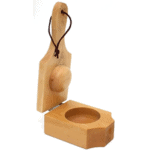
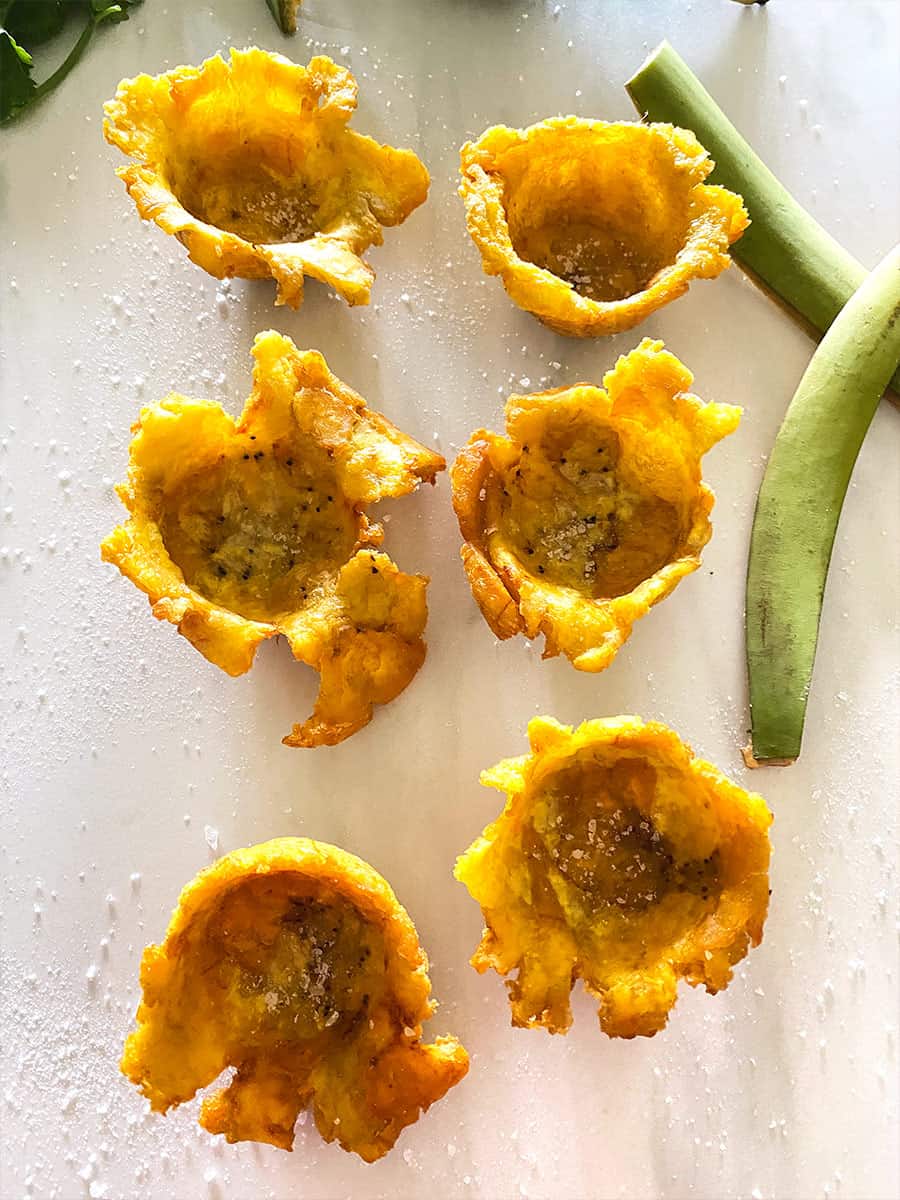
Usually, tostones are mashed into a disk using a tostonera, plate, or flat surface. But you can also use a stuffed plantain press that shapes the tostone into a cup and then fry them like that. This gives you a delightful little bowl that you can fill and serve as appetizers. 

One of my favorite fillings to use is shrimp ceviche. But you can fill them with meats, cheese, salsa, you name it. Try them filled with Cuban picadillo or ropa vieja.

Tostones Cups

Where to Buy Them

Since plantains are so popular now, you can probably find them at your local grocery store. If not, try specialty markets or Hispanic grocers. 

You can also find tostones in the chip aisle, already fried and ready to eat. Although these are not as good as the ones you fry yourselves, they are crunchy and can be used as a chip. My only complaint with these is that they are usually smaller than the ones you make at home and are often broken into pieces. You also miss the meatiness you get with homemade tostones. Still, they can be fun to eat. Brands to look for include Chifles and Chiquita.

You may also find fried plantains in the freezer section. These have usually been fried once and mashed, so all you have to do is fry them for a few minutes in medium-high heat to crisp them up. You may even be able to find them in the cup shapes already. Goya is a good brand to look for. 

I do highly recommend you try making them yourself if you can. They are so worth the effort! Let me know if you make them and what toppings you used.

Print
clock clock iconcutlery cutlery iconflag flag iconfolder folder iconinstagram instagram iconpinterest pinterest iconfacebook facebook iconprint print iconsquares squares iconheart heart iconheart solid heart solid icon
Cuban Tostones

Cuban Tostones Are Great As A Side Dish or Appetizer

5 Stars 4 Stars 3 Stars 2 Stars 1 Star No reviews
  • Author: Sandi Abbott
  • Prep Time: 5
  • Cook Time: 9
  • Total Time: 14 minutes
  • Yield: 6 1x
  • Category: Side Dish
  • Method: Frying
  • Cuisine: Cuban

Description

These tostones are delicious as a side dish or served with a dipping sauce. You can also mash into cups and fill with savory goodies like ceviche or ropa vieja.


Ingredients

Scale

2 green plantains

Vegetable Oil for frying

Salt


Instructions

Preheating: Add oil to a frying pan and set on low heat. You’ll need about 1 inch of oil in the pan. 

Peeling and Slicing: Cut the ends off the plantain, cut 4 slits diagonally into plantain. Stick a knife blade just under the skin and begin to pry the skin off. Peel each section, being careful not to remove any of the flesh. Cut crosswise into 1 1/2 inch slices. 

First Frying: Fry the plantain slices on low heat for about 3 minutes on each side. Remove and drain on paper towels.  Remove from oil, drain on paper towels and salt immediately (so the salt sticks to the tostones). 

Smashing: Place one slice on a cutting board and use a small plate or a large glass measuring cup to mash the plantain to about a 1/2″ to 1/4″ thickness, depending on your preference. If you’re making tostones cups, you’ll need to use the special masher. Spray the cup with a little cooking spray to make it easy to remove the mashed cup. 

Second Frying: Increase the heat to medium low and cooke the plantain discs or cups until golden, about 2-3 minutes total.


Notes

Serve with chimichurri or lime-cilantro aoili. 

Watch the videos in the post to see how to mash the tostones. 


Nutrition

  • Serving Size: 6

Cuban Tostones Are Great As A Side Dish or Appetizer Read More »
maduros

Fried Sweet Plantains Are The Most Popular Cuban Side Dish

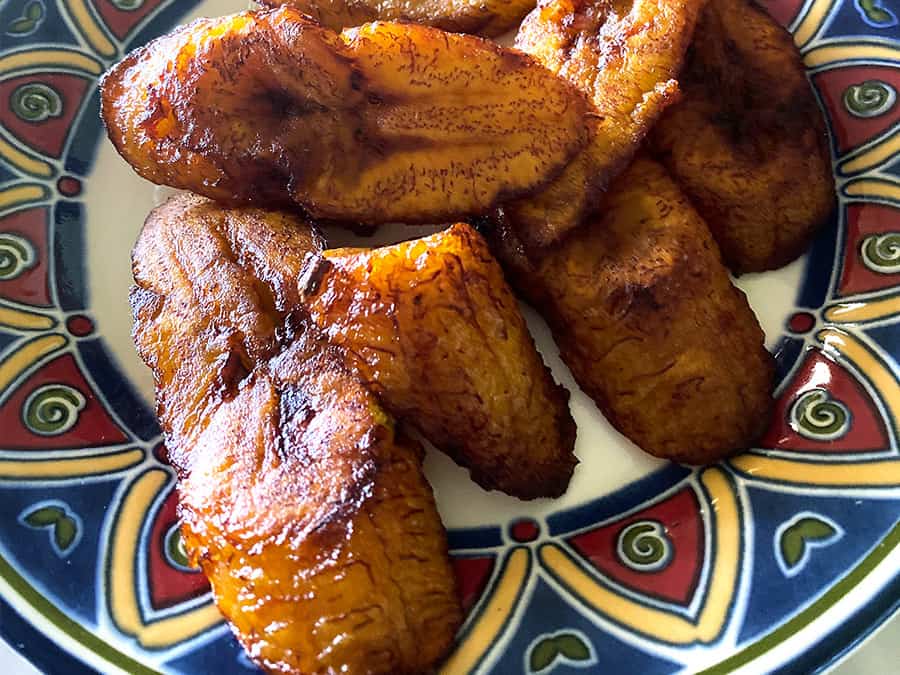
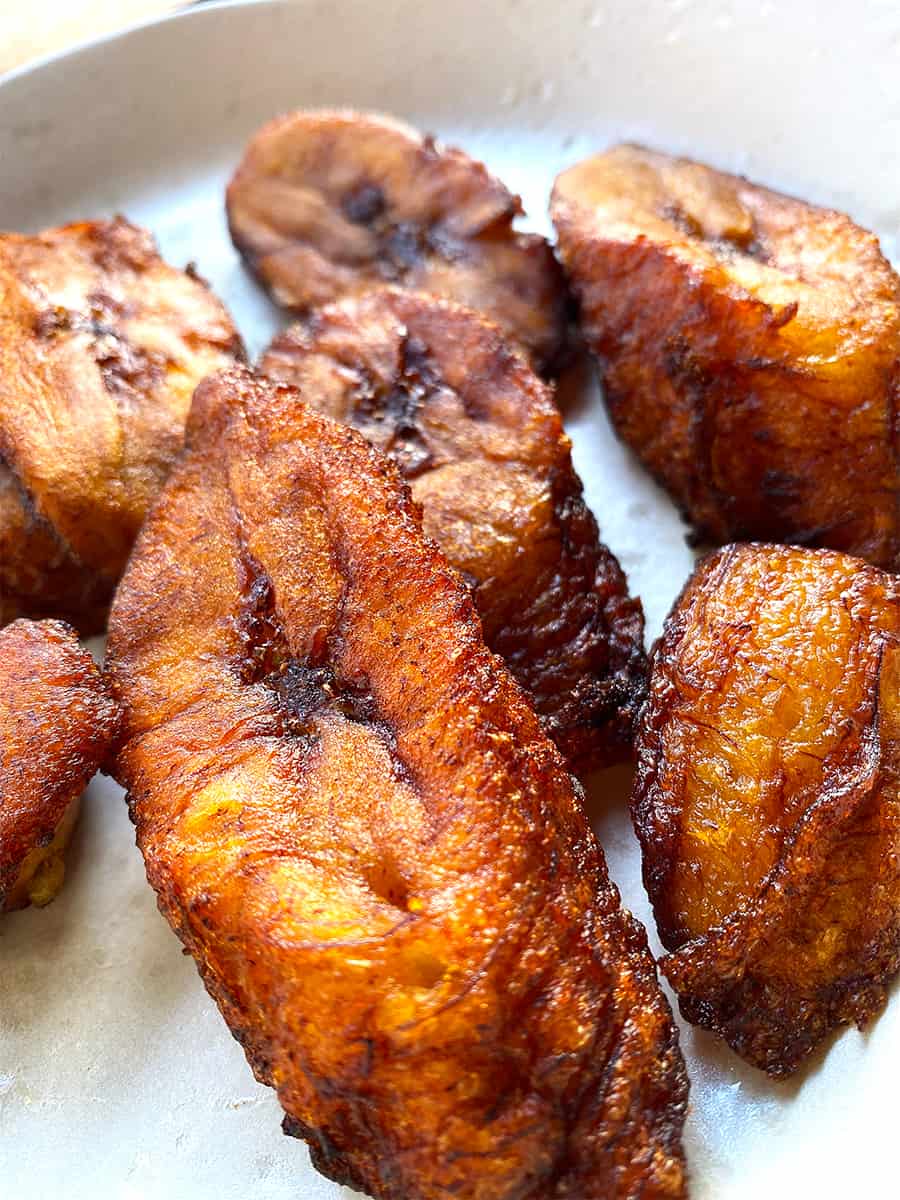
Fried sweet plantains, known as plátanos maduros, are a very common side dish in Cuban cooking. It’s usually served with savory meat dishes but can be eaten with just about anything. In fact, some folks can’t even eat their favorite Cuban dishes without their side of fried maduros! 

This dish is super easy to make, but the trick is to use very ripe plantains. So, let’s start with picking the plantains for fried maduros.  

ripe plantains

How To Tell When Plantains Are Ripe 

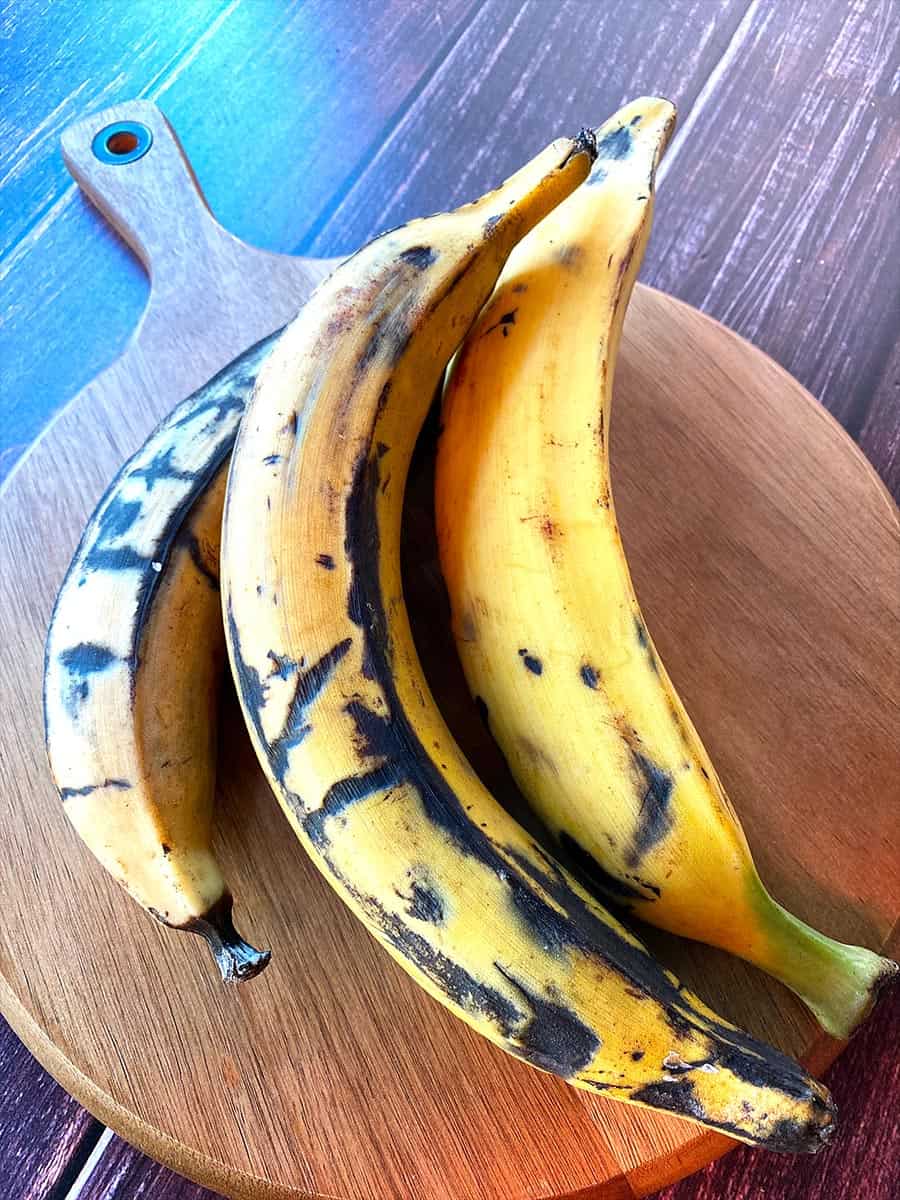
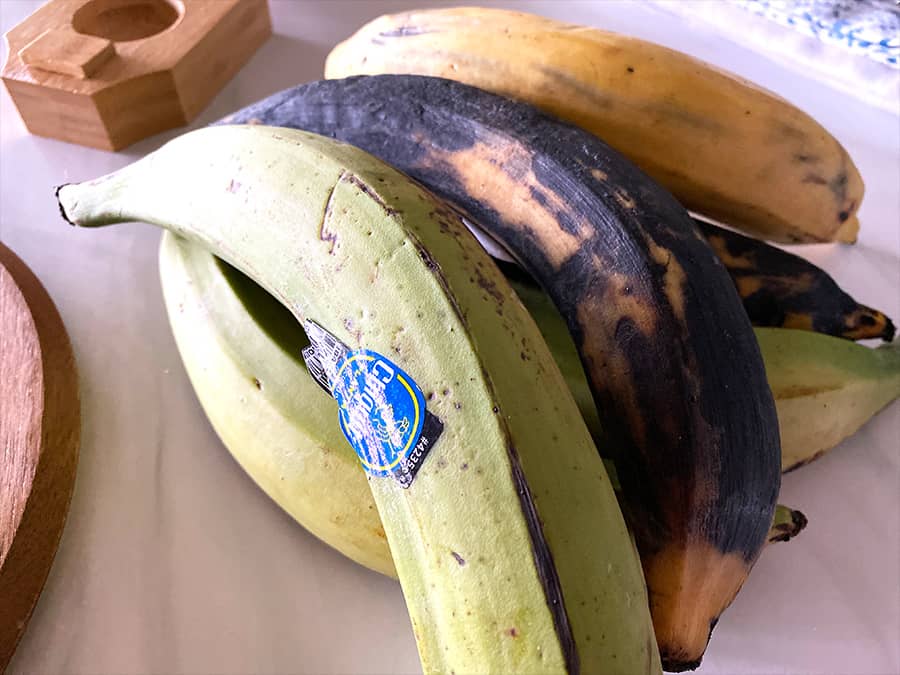
Plantains are sold in various degrees of ripeness, and all are delicious to make. But the darker the skin, the sweeter they are. They are especially great fried. For fried sweet plantains, you want the skin to have black spots. Actually, nearly black skin makes for the sweetest maduros.  

Sometimes it’s hard to find them this ripe. In that case, you can buy yellow plantains and let them ripen a bit before frying. If you can’t wait, you can make maduros with the yellow plantains. They just won’t be quite as sweet, but they are delicious nonetheless. Yellow plantains are called plátano pinton. 

As a side note, green plantains are also delicious. You can make twice-fried plantains or tostones.

sweet plantains

How To Make Maduros 

Once you have a ripe plantain, you’re ready to make some maduros! Although plantains look like bananas, they are quite different. You have to cook them first because they are not very good raw. Also, peeling them is a little harder. You can’t just peel them like a banana. 

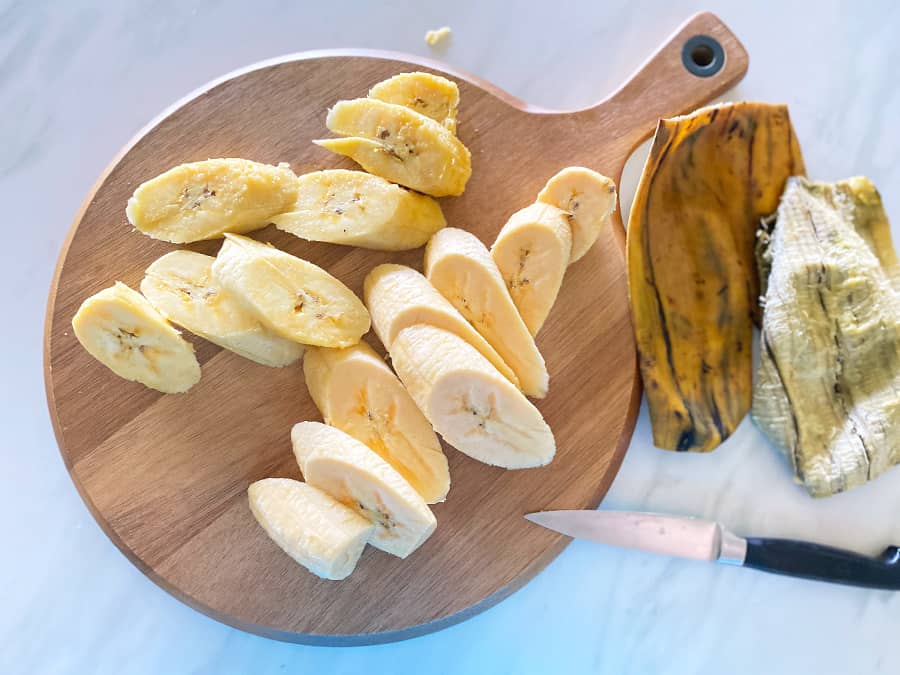
The best way to peel a plantain is to cut off both ends and then cut a slit into the skin lengthwise. For ripe plantain, one or two slits are enough. Then you can insert a knife edge just under the skin and peel it back.  To watch a video on how it’s done, check out my Why I love Cuban Plantains post.

Next, you’ll cut the banana diagonally into half-inch slices. Fry them in medium-hot oil for about three minutes per side. Drain them on paper towels and lightly salt. They are ready to eat.  

maduros

What To Eat With Maduros

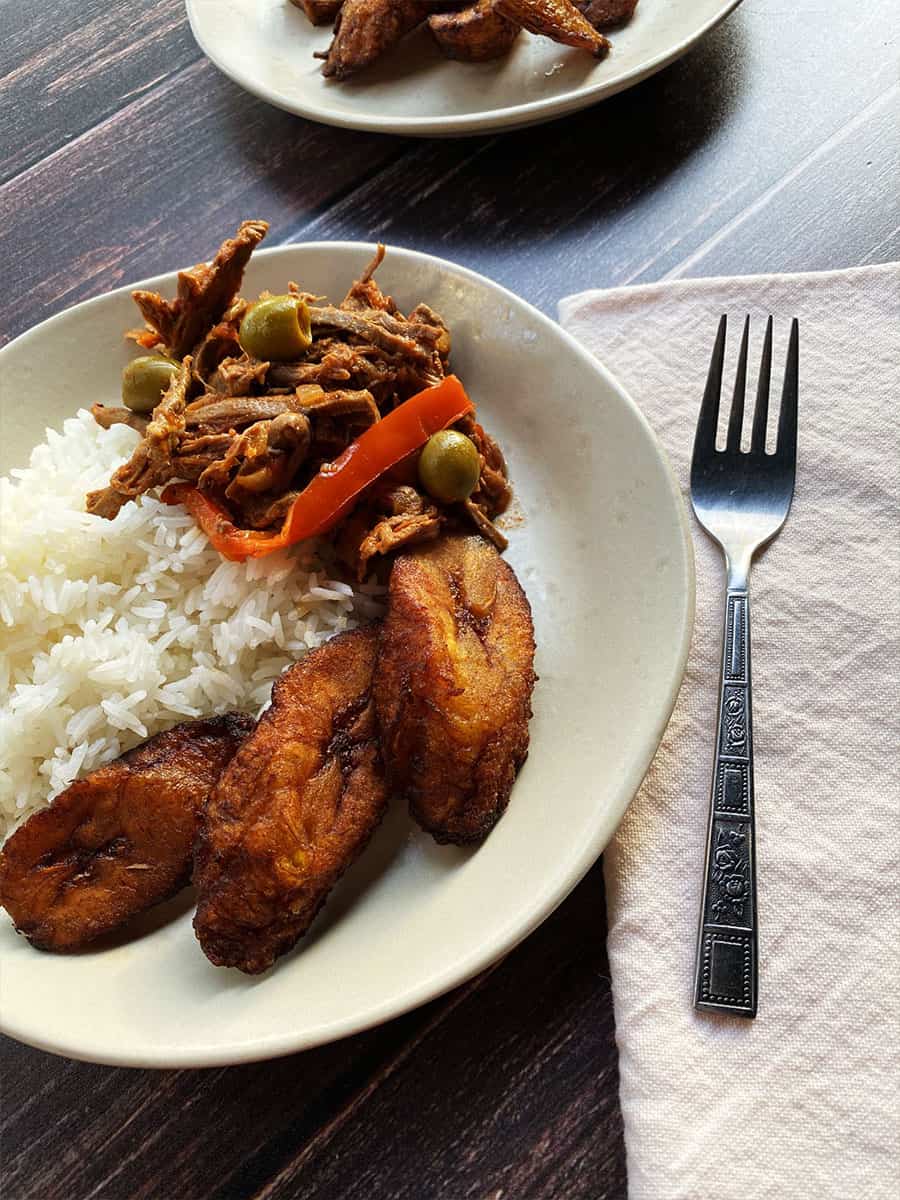
Maduros give dishes a sweet and salty component that is addictive. They are delicious with savory dishes like authentic Cuban picadillo, paella mixta and ropa vieja. They can even be added to pizza and sushi!  

Try them and let me know what’s your favorite maduros combo.  

Print
clock clock iconcutlery cutlery iconflag flag iconfolder folder iconinstagram instagram iconpinterest pinterest iconfacebook facebook iconprint print iconsquares squares iconheart heart iconheart solid heart solid icon
sweet plantains recipe

How To Make Maduros

5 Stars 4 Stars 3 Stars 2 Stars 1 Star 5 from 1 review
  • Author: Sandi Abbott
  • Prep Time: 5
  • Cook Time: 6
  • Total Time: 11 minutes
  • Yield: 68 slices 1x
  • Category: Side Dish
  • Method: Frying
  • Cuisine: Cuban

Description

Fried sweet plantains, known as maduros, are a very popular Cuban side dish that is perfect with savory meat and chicken entrees. They give your dishes a sweet and salty appeal you’ll love!


Ingredients

Scale

1 Ripe Plantain (skin should be mostly black and flesh should be fairly soft)

Vegetable Oil for Frying

Salt


Instructions

Heat oil over medium heat for a few minutes.

Preheating: While the oil is heating up, peel and slice a ripe plantain.

Peeling: Cut off both ends of the plantain and cut a slight lengthwise. Stick your knife just under the skin and pull the skin off. 

 sweet plantains

Slicing: Cut the plantain diagonally into half-inch slices. One plantain should yield 6-8 slices. 

fried plantains

Frying: Fry the plantains in vegetable oil about 3 sides per side until the skin is a dark golden brown. Drain on paper towels and lightly salt. 


Notes

Serve maduros with savory Cuban dishes like picadillo and ropa vieja

Fried Sweet Plantains Are The Most Popular Cuban Side Dish Read More »
Cuban Plantains

Why I love Cuban Plantains

There’s no meal that cannot be made even better with the addition of some Cuban plantains! They can be fried, stewed, boiled, or baked. They are delicious when they’re green, ripe, or in between. A super popular Cuban side dish, plantains are served with just about every entrée. In fact, most Cuban dishes are naked without a side of maduros (ripe fried plantains) or tostones (twice-fried green plantains).  

Plantains are grown throughout South and Central America and the Caribbean, and they are a staple of many Latin and Caribbean dishes.  

They can be eaten as chips, added to soups and stews, stuffed with all kinds of delicious and served as a side dish or main dish. They are super versatile! 

maduros

Cuban Plantains vs. Bananas 

While Cuban plantains and bananas look alike, they are quite different. Plantains are technically a fruit, but they cannot be eaten raw. They are more like a potato that must be cooked before it’s edible.  

Plantains are also much bigger than bananas and are often eaten with savory dishes. I didn’t know this until I did a little research for this post, but bananas are sometimes called dessert bananas. This, of course, makes sense since they are often used in desserts.   

How to Cook Plantains 

Cooking preparation really depends on the stage of ripeness of the plantain. But the most common cooking method is frying. Let’s look at the various stages of ripeness and the appropriate cooking method for each. 

Cuban Plantains

Green or Unripe 

Green plantains are unripe and have very firm flesh. Here are some ways to enjoy green plantains: 

Tostones: These are also known as twice-fried plantains. You first cut the plantains into one and half inch pieces that look like cylinders. Then you fry them in low heat (known as blanching) until they are tender enough to be pierced with a fork. Then you remove them from the pan and mash them into discs.  

You can use a tostones masher called a tostonera or a plate or other flat surface. I use a large 4-cup glass measuring cup to mash mine. Once mashed into discs, turn the heat to medium and fry them for two minutes to crisp them up.   

tostones cups

Tostones Cups: Tostones can also be shaped into cups to hold delicious savory fillings like picadillo and ceviche. To make these, you need a special stuffed plantain press that makes the process super quick and easy.  

mariquitas

Mariquitas: These are plantain chips and are cooked the same way you would potato chips. They are cut into thin slices with a mandolin or box cutter and then fried in hot oil until crisp. These are usually served with a dipping sauce such as cilantro-lime aioli, mojo, or chimichurri. Mariquita plantain chips are great as an appetizer or served as a side with sandwiches.  

Follow my recipe on how to make tostones and mariquitas here. 

Plantain Fufu: Here, plantains green and yellow (pinton) plantains are boiled then mashed with olive oil, garlic, and pork. This is usually served as a main dish. I often make a healthier version of this topped with sauteed or grilled vegetables instead of pork.  

authentic ropa vieja

Ripe Plantains 

Ripe plantains are usually cut on the diagonal into half-inch slices and fried to make maduros. These sweet fried plantains are super sweet and create a great sweet and savory combo. Without a doubt, maduros are the most popular way to eat plantains!   

To make good maduros, you must know how to pick ripe plantains. The skin on the plantain should be mostly black, and the flesh should be soft. You’ll probably think these plantains are too ripe, but they’re not. They are just perfect for frying. Here are my step-by-step instructions on making maduros.  

If the plantain skin is yellow, they are not ripe enough. You end up with a semi-sweet Maduro. These are also good, and it really depends on your sweet tooth.  

Speaking of a sweet tooth, there’s an even sweeter way to serve ripe plantains that’s a dessert. It’s called Platano en Tentacion (which means tempting plantain). I’ve actually never eaten it this way, but my Mom often mentions it. My Big Fat Cuban Family blog has a recipe you can try.

Yellow Plantains 

Known as Pinton in Spanish, yellow plantains can be fried like maduros. Most often, yellow plantains are used for soups and stews. Mami (aka Bean Train) always adds yellow plantains to her red bean soup, which is delicious. Soon I promise to post her recipe. 

Pinton plantains are also boiled and mashed to make fufu, as mentioned above.  

How to Peel A Plantain 

There’s a trick to peeling plantains. You can’t just peel them like bananas. When they’re green, they are especially harder to peel because the skin won’t pull away as easily. The best way to peel a plantain is to cut the two ends off and then cut a few slights lengthwise on the banana. Then use a knife to get just under the skin and begin to loosen the skin from the flesh. Once you get a section to part, it becomes easier.  

You just have to cut one or two slits for ripe plantains, and once you get the knife under the skin, it can part quite easily. You’ll need to make a few slits for green plantains and remove the skin in small sections so you don’t lose any flesh in the process. This quick video shows you how to do it.  

Where to Buy Them 

Here in Miami, plantains are available at every supermarket, including Publix. Since they’ve grown in popularity, you’ll probably find them in your local grocery store. But if you don’t, you could try Hispanic or Asian markets or the freezer section in your local store. You can also find tostones and mariquitas in the chip isle.

I hope you give plantains a try. If you do try them, drop me a comment and let me know how you liked them! 

Try These Recipes For Fried Plantains

Why I love Cuban Plantains Read More »

Cuban Instant Pot Black Bean Soup

The Best Cuban Instant Pot Black Bean Soup

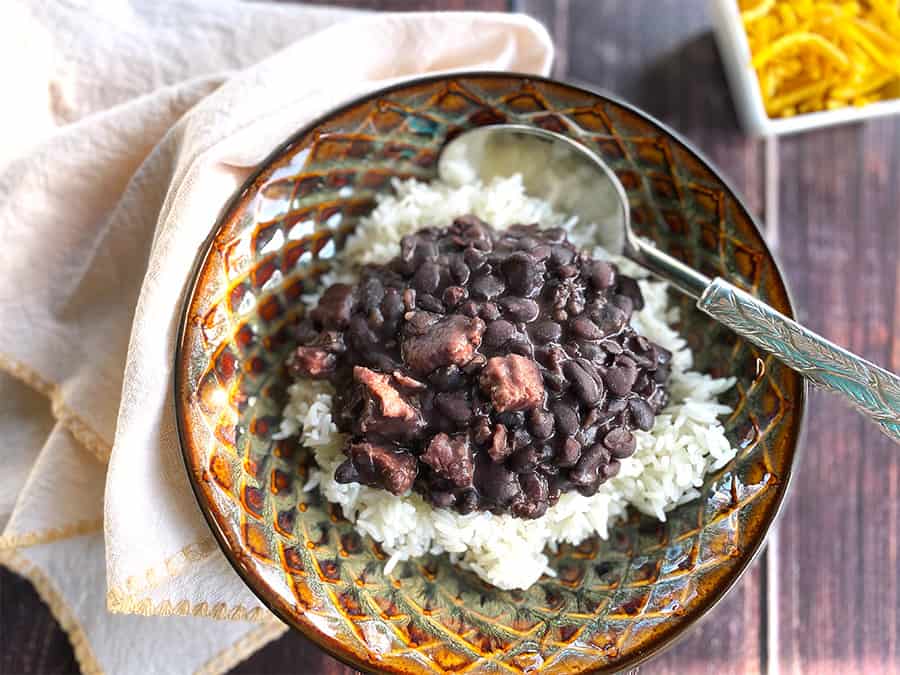
This Cuban Instant Pot Black Bean Soup is Mami’s recipe, and it’s eaten at her house every week. Cubans love their black beans and serve it over rice with most meals. In fact, Cuban restaurants have black beans and rice as the typical side with any entrée.

You could say that black beans are the staple of the Cuban diet, at least it was for me growing up. Old-time Cubans think that eating rice without beans is too dry and forget about eating any entrée without rice! You’d think in a tropical climate like Cuba they would not be eating bean soups so often, but it’s their go to, no matter the temperature outside.

I don’t eat Cuban black beans as often as I used to growing up, but you can bet I have a few servings stashed in my freezer for quick black beans whenever the comfort food mood strikes. Mami (aka Bean Train) usually makes it for me and freezes it in little one-cup care packages. 

Cuban Instant Pot Black Bean Soup

Authentic Cuban Black Beans Are Simple And Easy To Make

Traditional Cuban black bean soup is a basic dish with just a few ingredients. I know many recipes call for tomatoes and such, but that’s not very traditional. An authentic Cuban black beans recipe has the traditional sofrito made with onions, peppers, and garlic. Seasonings include bay leaves, cumin, and oregano. Some Cuban recipes also use salt pork, but it’s optional. You can easily make vegan black bean soup by omitting the pork. 

While you can cook the beans on the stovetop, my mom always used a pressure cooker. Now I use an Instant Pot, but either method cuts down the cooking time significantly. 

Soaking and Cooking The Beans

Most Cuban recipes call for soaking the beans for a few hours or overnight. This makes the beans cook faster, breaks down complex sugars that make beans hard to digest, and removes harmful lectins. To learn more about how to cook beans, check out this New York Times article.

Cuban black beans and picadillo

The Best Way to Eat Cuban Black Beans

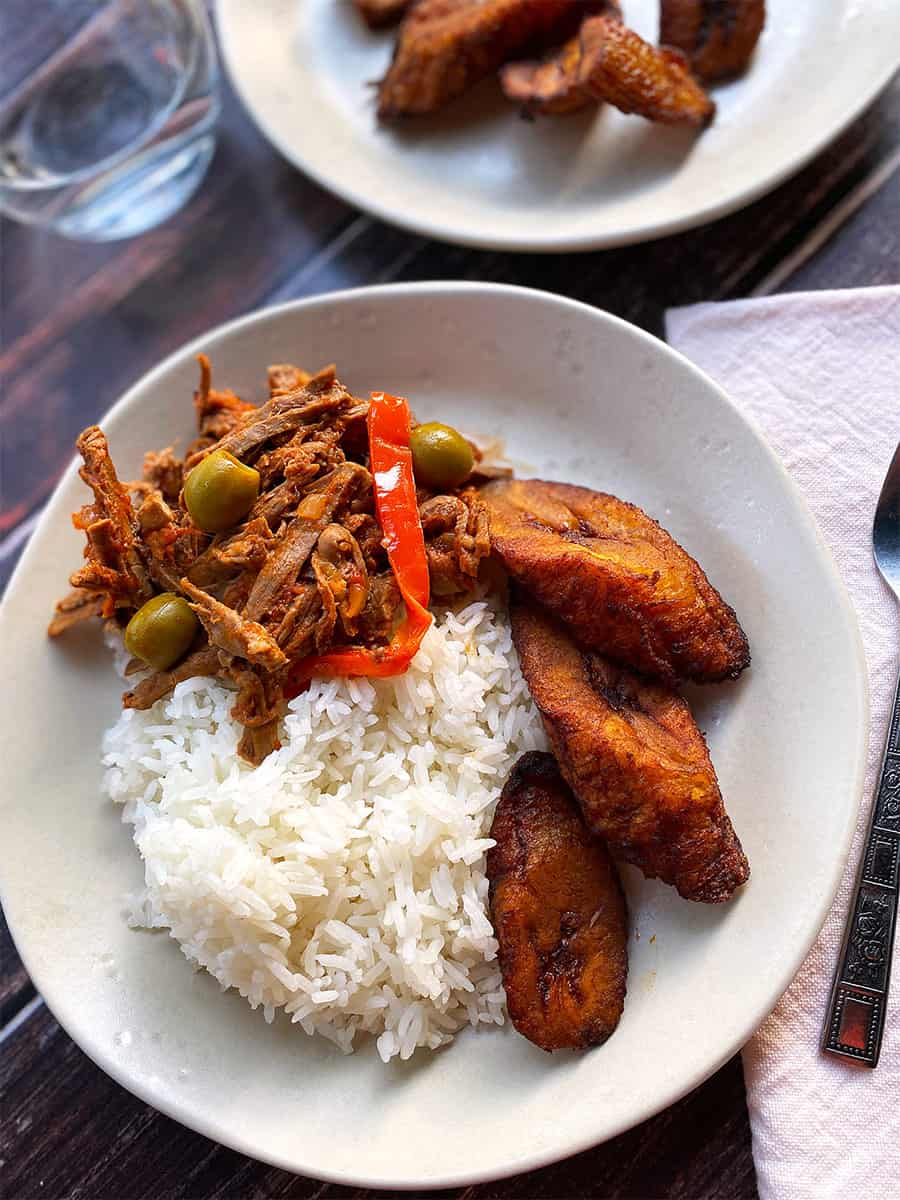
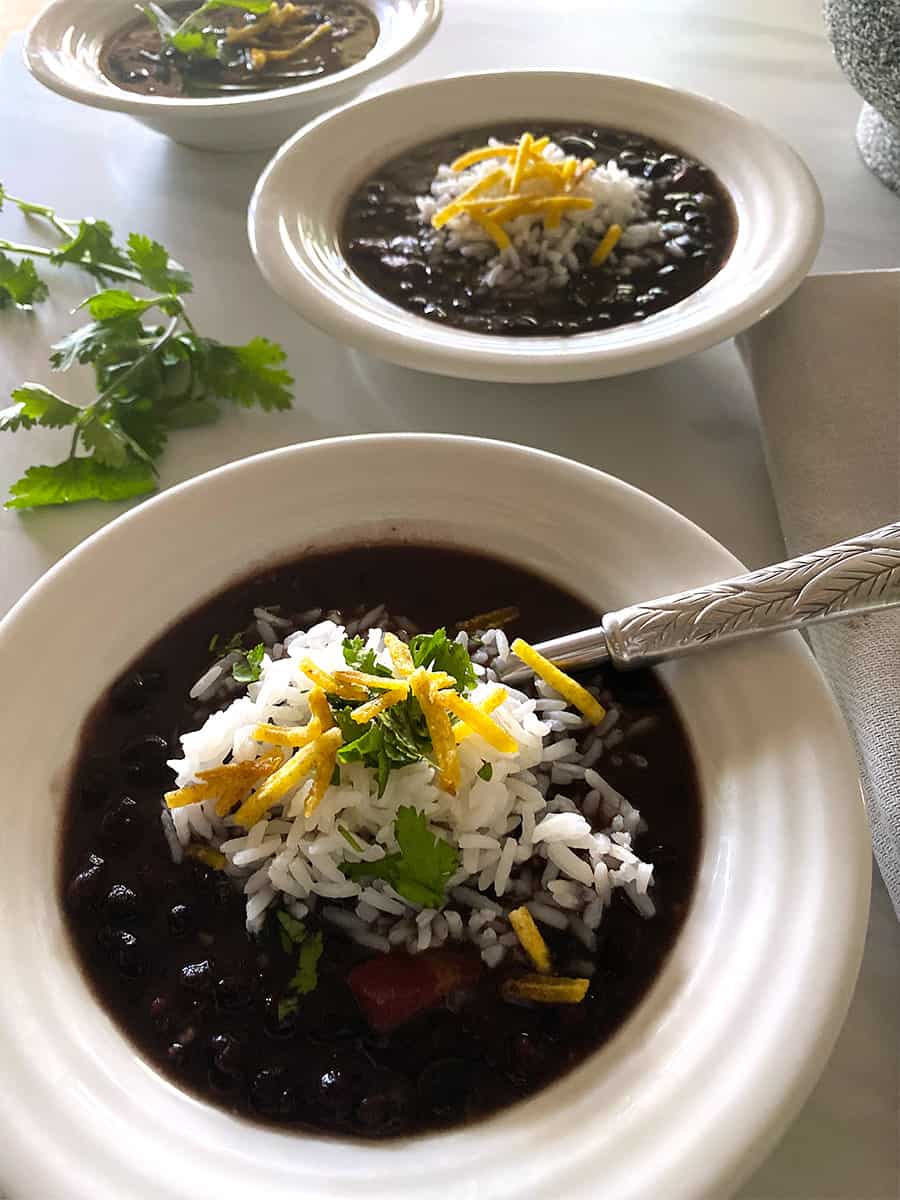
You can enjoy a bowl of black beans as a soup. They are healthy and delicious. But most Cubans eat their beans over rice, as I mentioned earlier. It’s paired with just about any entrée, but it’s the best with picadillo or ropa vieja. A bowl of white rice, black beans, and picadillo is Cuban comfort food for me!

These beans freeze well, and you can keep them in the freezer for six months if they last that long. That way, you can always make it a part of any meal. My son likes to turn it into refried beans for nachos or enchiladas. 

You can also top the beans with avocado, cilantro, or a little pico de gallo and make your simple bean soup into a meal. I hope you enjoy making my Cuban Instant Pot Black Bean Soup ?

¡Buen provecho!

Print
clock clock iconcutlery cutlery iconflag flag iconfolder folder iconinstagram instagram iconpinterest pinterest iconfacebook facebook iconprint print iconsquares squares iconheart heart iconheart solid heart solid icon
Cuban Instant Pot Black Bean Soup

The Best Cuban Instant Pot Black Bean Soup

5 Stars 4 Stars 3 Stars 2 Stars 1 Star No reviews
  • Author: Sandi Abbott
  • Prep Time: 10
  • Cook Time: 90 minutes
  • Total Time: 1 hour 40 minutes
  • Yield: 10 1x
  • Category: Soup
  • Method: Pressure Cooker
  • Cuisine: Cuban

Description

Cuban black bean soup is the quintessential Cuban dish! This authentic recipe is super easy to make, with just a few simple ingredients. We usually serve it with rice as a side dish, but it’s hearty enough to be a meal on its own. 


Ingredients

Scale

14 oz package dried black beans

2 bay leaves

1 green bell pepper

½ white onion (1 cup chopped)

4 garlic cloves, crushed

1 ounce salt pork (about ½ cup chopped)

1 tablespoon, plus 1 teaspoon olive oil

2 teaspoons salt

¼ teaspoon black pepper

1 teaspoon oregano

½ teaspoon cumin


Instructions

Soaking: Soak black beans in water and a pinch of salt for 4 hours or overnight. 

Instant Pot: Rinse the beans and add to the Instant Pot along 8 cups of water, 2 bay leaves ½ green pepper, seeds, and ribs removed. Set the Instant Pot to pressure for 25 minutes. Make sure the steam valve is sealed. It will take about 20 minutes for the Instant Pot to build pressure, and then it will cook for 25 minutes. Once it’s done, allow the steam to release naturally, which should take about 10 minutes or so.

Prep: While the steam is releasing. Chop half a white onion, crush the garlic, chop the salt pork, and cut the remaining half green pepper into 6 large pieces (I remove these later, but if you want to leave in, you can chop the pepper finely). 

Sauté:

  • Set a saute pan on medium heat and add a few tablespoons of water and salt pork once heated.
  • Let it cook until the fat is rendered and the pork is browned for about 5 minutes.
  • Remove from the pan and set aside.
  • Add one tablespoon olive oil and let it heat up for 30 seconds.
  • Add the onions, garlic, and pepper and sauté until onions are softened about 5 minutes. 

Black Beans: Once the steam has been released, open the Instant Pot and add the salt pork, sauteed vegetables, and seasonings. Set the Instant Pot to sauté and cook for 30 minutes if you like your beans brothy or 45 minutes for thicker beans. 

Finishing: Once the beans are cooked to your desired thickness, add 1 teaspoon of apple cider vinegar and 1 teaspoon of olive oil. Adjust seasoning as desired. 

Serve with white rice. 

Makes 10 one-cup servings. 


Notes

These beans freeze well and can be stored in the freezer for up to six months. 

Stovetop Directions: If you’re not using an Instant Pot, you can simmer the beans on the stove top for an hour. Then add the sofrito, salt pork and seasonings and cook on low-medium heat until desired consistency. 

Nutrition

  • Serving Size: 10

The Best Cuban Instant Pot Black Bean Soup Read More »

Scroll to Top
Scroll to Top